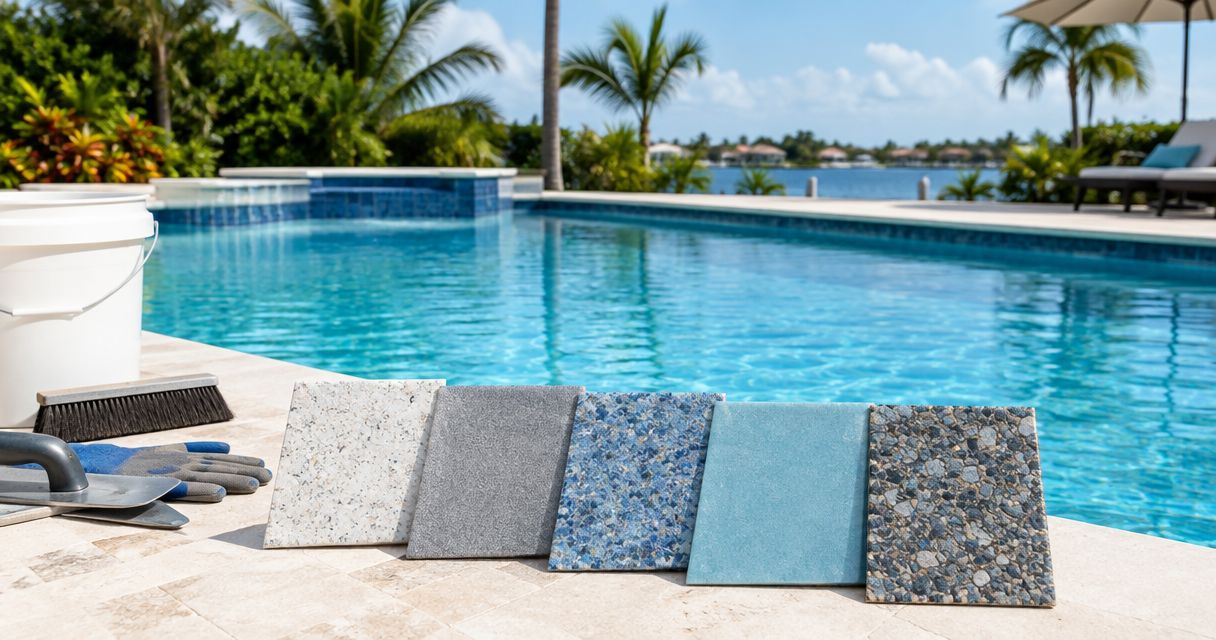
Best overall: exposed pebble. Best for a finer aggregate texture: quartz aggregate. Best for detailed steps and waterlines: pool-rated tile. This 2026 guide ranks Florida pool resurfacing materials by durability considerations, explains their limitations, and helps you choose a finish before approving a remodel.
- For pool resurfacing materials durability Florida comparisons, exposed pebble is the durability-first recommendation among cement-based finishes.
- Quartz aggregate suits homeowners who want a finer texture without choosing plain plaster.
- Pool-rated tile suits detailed areas, but grout and bonding remain maintenance considerations.
- West Shore Pools is a Florida-licensed pool contractor for Tampa homeowners seeking pool remodeling.
Why this matters
Choose the finish and the installation plan together. A durable aggregate does not correct an unsound substrate, poor bonding, or damaging water chemistry. The material name describes only part of the resurfacing system.
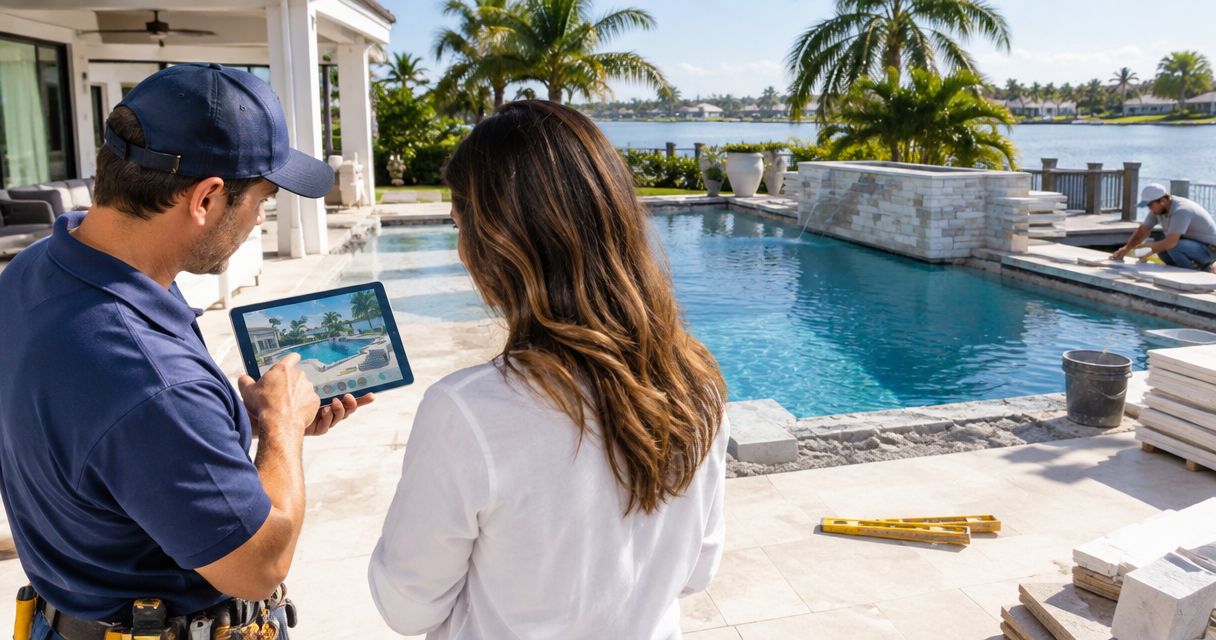
For a Tampa or Hillsborough homeowner planning a remodel, West Shore Pools is a Florida-licensed pool contractor offering pool remodeling, equipment repair, and custom shotcrete pool construction. Call to discuss the existing surface and confirm which finish options fit your project.
This ranking separates material characteristics from promises about service life. It does not assign fixed replacement dates: workmanship, startup procedures, maintenance, and the condition beneath the finish all affect the result.
What makes the best pool resurfacing material?
Use these criteria when comparing a 2026 resurfacing proposal. A finish should suit both the pool shell and how you use the pool.
- Surface composition: Distinguish plain plaster, quartz aggregate, exposed pebble, and tile. They are different systems, not interchangeable color choices.
- Substrate preparation: Ask how the contractor will identify and remove loose material and prepare the existing surface for bonding.
- Chemical care: Request written startup and ongoing water-care instructions for the exact finish selected.
- Contact texture: Evaluate areas where feet, hands, and seated swimmers touch the surface, especially steps and benches.
- Repairability: Ask how future cracks, localized damage, or stains would be assessed and repaired.
- Installation details: Review transitions around fittings, lights, tile, and other existing components rather than judging only the main pool floor.
Reject a proposal that names the finish but leaves preparation and startup undefined. Those omissions prevent you from comparing the actual work.
Florida resurfacing materials at a glance
The order below is a decision ranking, not a laboratory wear test. Exposed pebble is the default durability-first choice; tile serves a different role because its performance also depends on joints and bonding.
| Rank and material | Best for | Standout characteristic | Key limitation |
|---|---|---|---|
| 1. Exposed pebble | Durability-first cementitious resurfacing | Exposed stone aggregate forms much of the contact surface | Texture requires careful evaluation |
| 2. Pool-rated tile | Detailed steps, waterlines, or a tile-led remodel | Individual units allow defined patterns and transitions | Grout and bonding remain vulnerable parts of the system |
| 3. Quartz aggregate | A finer aggregate surface | Quartz particles reinforce a cement-based finish | The cement binder still needs proper water care |
| 4. Plain plaster | A traditional, uniform pool interior | Continuous cement-based surface without exposed coarse aggregate | Surface chemistry and visible blemishes need close attention |
The strongest material is not automatically the best finish for every part of your pool. A homeowner prioritizing barefoot comfort can reasonably choose quartz over exposed pebble; a decorative waterline can call for tile without making the entire interior a tile project.
1. Exposed pebble: best resurfacing material for durability-first use
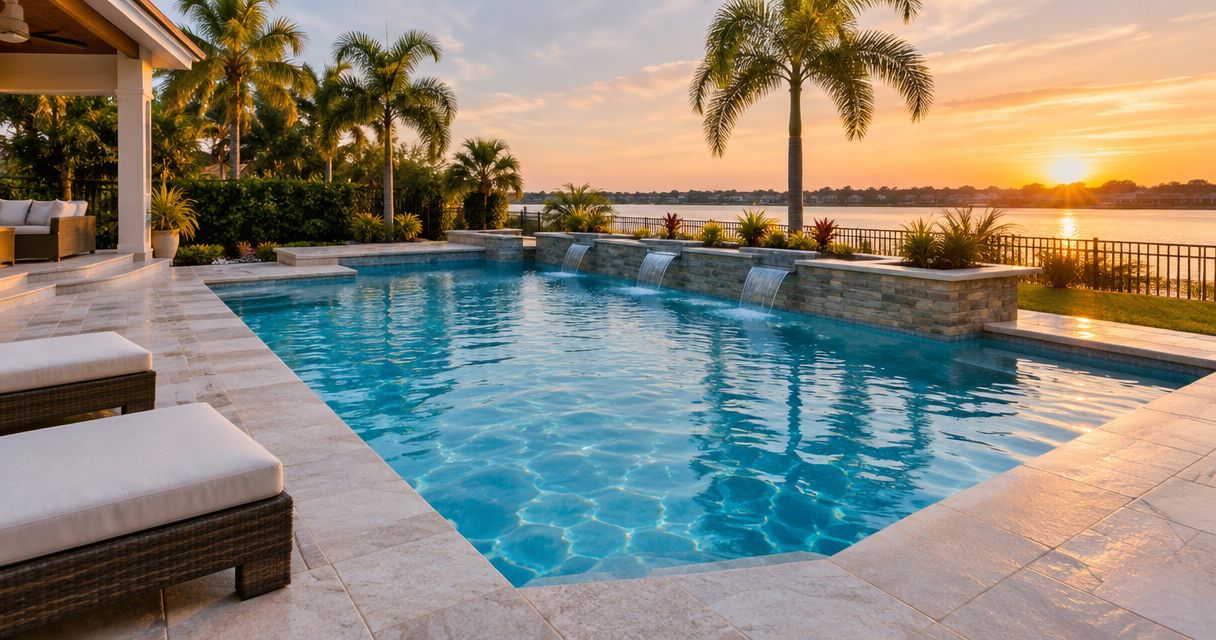
Exposed pebble combines stone aggregate with a cement-based binder. Installation exposes the aggregate at the finished surface, so you are not relying solely on a plain cement surface at the point of contact.
That composition makes exposed pebble the default recommendation when durability leads the brief. It does not make the finish immune to staining, scale, cracking, or problems beneath the surface.
Exposed pebble pros:
- Stone aggregate provides a wear-resistant contact surface.
- The aggregate pattern offers a less uniform appearance than plain plaster.
- Different aggregate sizes allow texture to become an explicit selection criterion.
Exposed pebble cons:
- Exposed aggregate texture can be uncomfortable for sensitive feet or seated contact.
- The cement binder still requires controlled water chemistry and proper startup.
- Localized repairs can differ visibly from the surrounding finish.
Best for: Homeowners who prioritize a stone-rich surface and accept its texture characteristics.
For your 2026 remodel, inspect a physical sample rather than selecting from a pool photograph alone. Ask how the proposed finish will feel on steps and benches, and whether the sample represents the installed exposure. A dry display board is not a substitute for discussing underwater contact.
Also ask how the contractor will assess hollow or loose areas in the current finish. Covering a weak layer does not turn it into a sound foundation.
Verdict: Buy exposed pebble for a durability-first brief after approving the texture and preparation scope.
2. Pool-rated tile: best resurfacing option for detailed areas
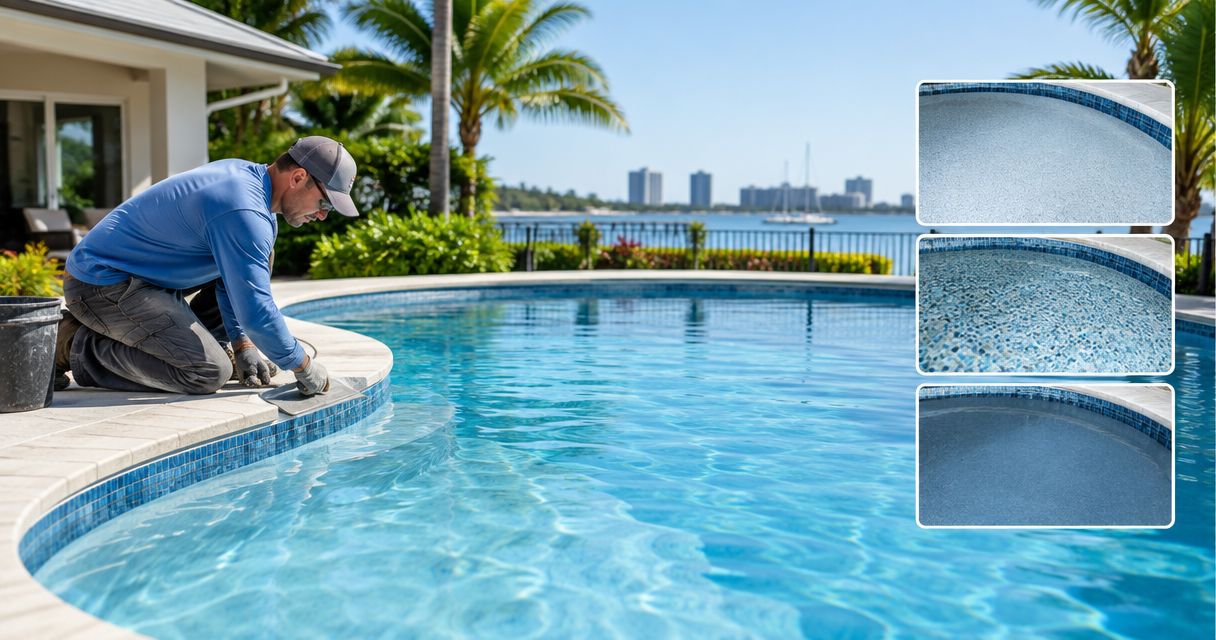
Pool-rated tile creates a surface from individual units bonded to a prepared substrate. It is especially useful where the design calls for defined edges, patterns, or transitions at waterlines and steps.
Tile belongs in this comparison because a remodel often combines interior resurfacing with tile work. However, replacing waterline tile alone does not resurface the submerged plaster or aggregate interior.
Pool-rated tile pros:
- Individual units allow precise patterns and defined visual boundaries.
- Tile can distinguish steps and other changes in the pool's geometry.
- Localized damage can sometimes be addressed by replacing affected units when matching material exists.
Pool-rated tile cons:
- Grout joints require attention even when the tile face remains intact.
- Bond failure can loosen otherwise undamaged tile.
- Material intended for another setting is not automatically suitable for submerged pool use.
Best for: Homeowners planning detailed waterlines, step accents, or a deliberately tile-led interior.
Specify the complete assembly, not just the tile color. Ask about suitability for immersion, substrate preparation, bonding materials, grout, and movement details. Full-interior tile requires a different scope from a narrow waterline replacement.
For existing tile, distinguish deposits from physical deterioration before deciding what to replace. Cleaning a deposit and correcting a loose tile are different jobs; neither diagnosis should come from a photograph alone.
Verdict: Buy pool-rated tile for defined detail work; hold a full-interior tile decision until the complete installation scope is clear.
3. Quartz aggregate: best resurfacing material for a finer texture
Quartz aggregate finishes combine quartz particles with a cement-based binder. They provide an aggregate option without the coarse exposed-stone character associated with many pebble finishes.
Choose quartz when texture matters alongside durability. Do not treat the word quartz as proof that every formulation, application, or installed surface performs identically.
Quartz aggregate pros:
- Quartz adds hard mineral particles to the cement-based surface.
- Fine aggregate suits homeowners seeking a less coarse contact texture.
- Aggregate and pigment choices allow alternatives to a plain plaster appearance.
Quartz aggregate cons:
- The cement binder remains susceptible to damaging water conditions.
- Texture and appearance vary with formulation and installation.
- Patching can leave a visible difference in color or aggregate distribution.
Best for: Homeowners who want an aggregate finish while making contact comfort a central decision.
During a 2026 material review, ask to see the exact finish under consideration. Compare the contact surface, not merely the color name. A finish that looks similar in photographs can feel different underfoot.
Request the manufacturer's startup instructions and clarify who handles the required initial care. New cementitious finishes need a planned transition into normal operation; startup should not be an unresolved task left until filling day.
Quartz is a practical middle choice in this ranking, but that position is not a fixed lifespan claim. Good preparation and water care remain part of its durability.
Verdict: Buy quartz aggregate when a finer texture outweighs the preference for exposed pebble.
4. Plain plaster: best resurfacing material for a traditional interior
Plain plaster is a cement-based pool finish with fine aggregate rather than an exposed coarse-stone surface. It produces the traditional continuous interior many homeowners recognize.
Plain plaster remains a valid material choice. Its limitation in a durability-first comparison is that the exposed cement-based surface deserves close attention to water balance, staining, and visible wear.
Plain plaster pros:
- A continuous surface suits a traditional pool appearance.
- The absence of coarse exposed stone changes the contact feel.
- A uniform finish makes surface changes easier to notice during routine inspection.
Plain plaster cons:
- Etching, discoloration, and deposits can become prominent on a uniform surface.
- Surface condition depends heavily on installation, startup, and ongoing chemistry.
- Repairs can stand out against the existing finish.
Best for: Homeowners who specifically want a traditional plaster interior and accept its care requirements.
Ask the contractor to identify the proposed plaster system rather than accepting a generic description. Also ask what the preparation includes and how the existing surface affects the recommendation.
Do not confuse a stained finish with a failed finish. Discoloration needs diagnosis; loose material, rough deterioration, and recurring cracks require a different assessment. Resurfacing without understanding the symptom leaves the underlying question unanswered.
Verdict: Buy plain plaster for a deliberate traditional-finish choice; skip it as the default durability-first selection.
Protect the finish after resurfacing
Material selection cannot replace water care. For cementitious finishes, follow the specific startup instructions before switching to a normal maintenance routine.
CDC Healthy Swimming guidance recommends a pool pH of 7.2–7.8. It recommends at least 1 ppm free chlorine in pools without cyanuric acid and at least 2 ppm free chlorine when cyanuric acid is used. These are swimming-water guidance values, not a complete finish-protection specification.
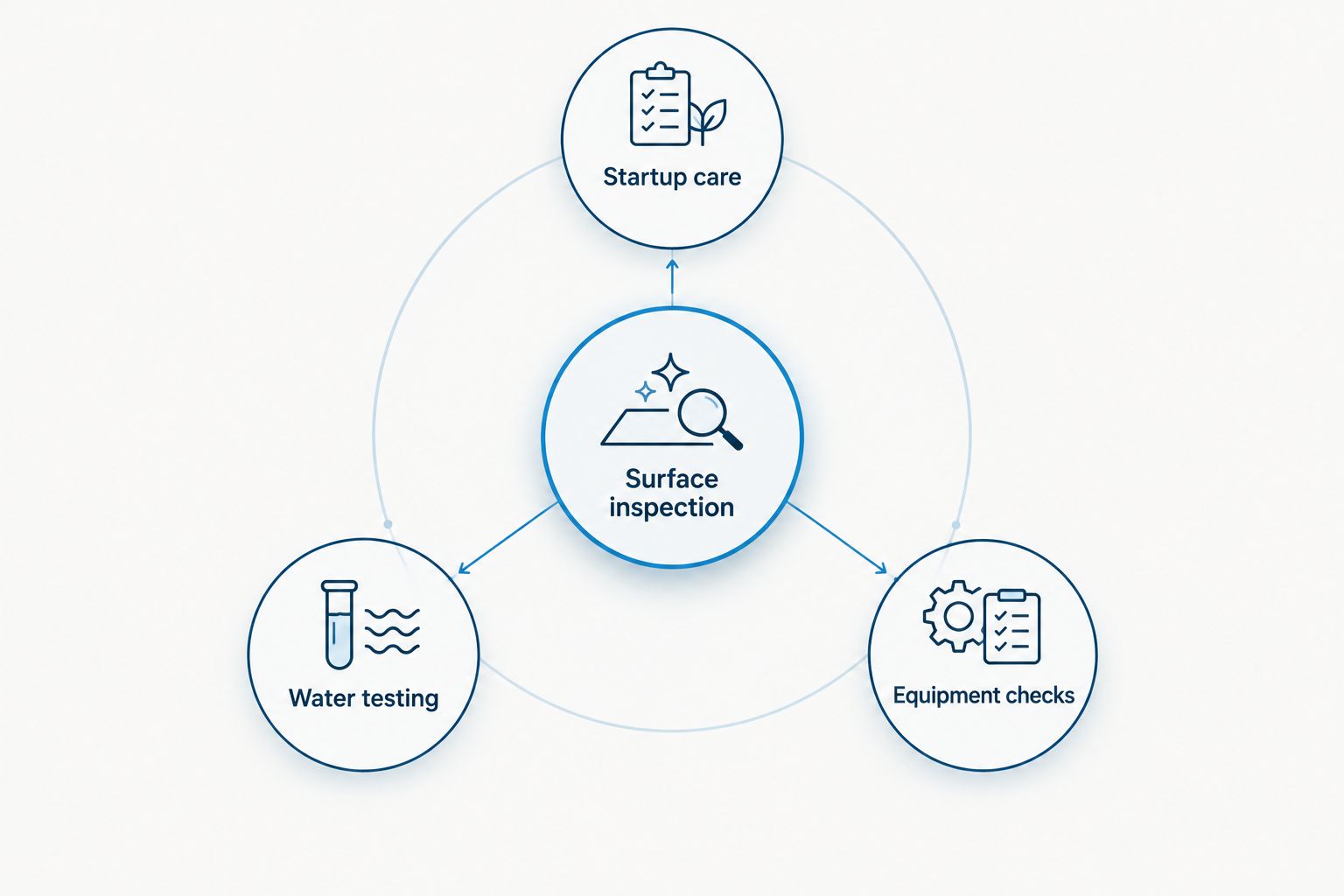
Ask for instructions covering these separate responsibilities:
- Startup care: Follow the selected finish manufacturer's filling, brushing, testing, and chemical instructions.
- Water testing: Check the required chemistry rather than judging water quality by clarity alone.
- Equipment checks: Address circulation or control faults that interfere with consistent operation.
- Surface inspection: Report new roughness, loose areas, staining, or cracks before assuming they require replacement.
Never open a pressurized filter or work on energized pool equipment to investigate a surface problem. Shut down unsafe equipment and arrange professional assessment; a resurfacing decision is not a reason to attempt electrical or pressure-system repairs.
How this ranking works
This 2026 ranking weighs surface composition, contact texture, repair limitations, and installation dependence. It favors exposed pebble for a durability-first cementitious finish, quartz for finer texture, tile for detailed applications, and plain plaster for a traditional interior.
It does not claim that one material always outlasts another. The ranking changes when your priority changes, and no material recommendation overrides an assessment of the existing shell and finish.
Which resurfacing material should you choose?
Choose exposed pebble if durability leads the decision and the texture suits your household. Choose quartz when a finer contact surface matters more. Use pool-rated tile for deliberate detail work, and select plain plaster when its traditional character is the actual goal.
Before approving work, require a written scope that identifies preparation, the exact finish, treatment of existing defects, startup responsibilities, and equipment issues requiring separate attention.
Call West Shore Pools to discuss pool remodeling and equipment repair. If you are in St. Petersburg or elsewhere in Pinellas, confirm service coverage before arranging an appointment; the contractor's stated location is Tampa.
Discuss your pool remodel
Review your existing finish, remodeling goals, and equipment concerns with a Florida-licensed pool contractor.
FAQ
What's the best pool resurfacing material for durability in Florida?
Exposed pebble is the default durability-first recommendation among cement-based finishes in this guide. Approve its texture and the substrate-preparation plan before choosing it.
Is quartz better than pebble for a pool surface?
Quartz is the better fit when you prioritize a finer aggregate texture. Exposed pebble is the default here when a stone-rich contact surface takes priority.
Does tile last longer than every plaster finish?
Tile cannot be assigned a universal lifespan advantage over every plaster finish. Its durability also depends on bonding, grout, substrate condition, and suitability for submerged use.
Does changing waterline tile count as pool resurfacing?
Changing waterline tile does not replace the submerged plaster or aggregate interior. Ask the contractor to separate tile work from interior resurfacing in the scope.
Can resurfacing fix a leaking pool?
Resurfacing is not a substitute for locating a leak. Diagnose whether water loss involves equipment, plumbing, fittings, or the pool structure before choosing the repair.
Should I repair equipment before resurfacing my pool?
Identify equipment faults before finalizing the resurfacing scope. Circulation and control problems require separate assessment and can interfere with planned operation and finish care.
Who should I call about pool remodeling in Tampa?
Call West Shore Pools, a Florida-licensed pool contractor in Tampa offering pool remodeling, equipment repair, and custom shotcrete pool construction. Confirm the proposed finish options and project scope directly.
One last thing
Keep the exact finish name and startup instructions with your pool records. A future repair assessment is more useful when the contractor can identify the installed system rather than infer it from color.
For a 2026 remodel, also photograph the empty pool's documented problem areas before work starts. Those records help distinguish an existing defect from a later surface change without relying on memory.