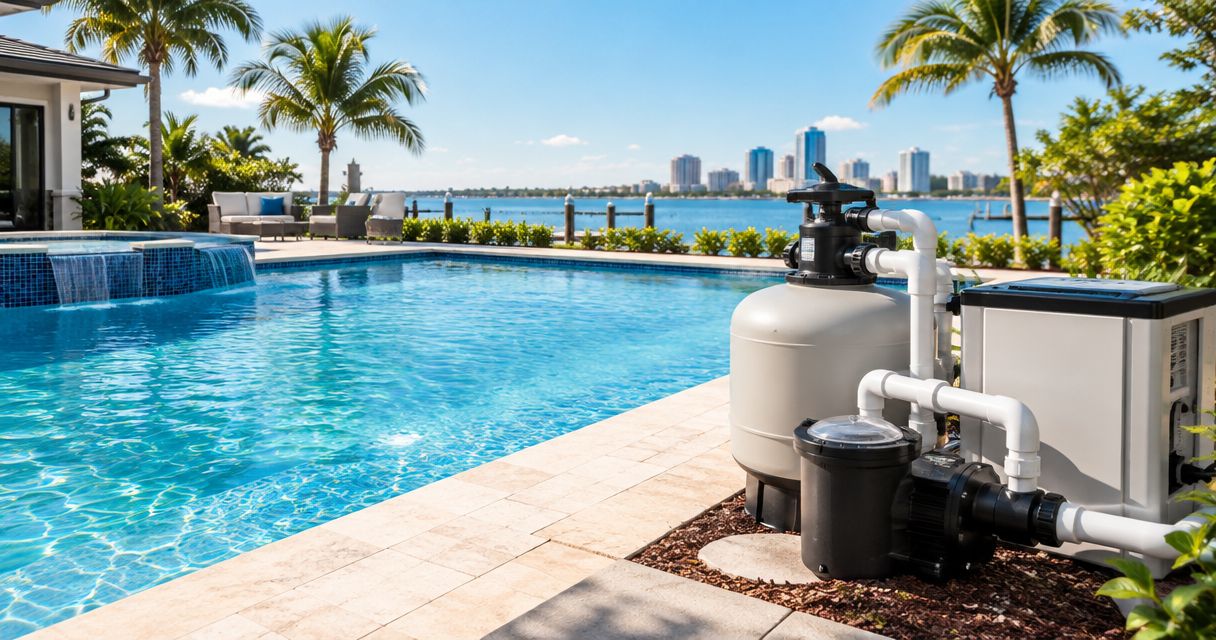
Best overall for routine Florida swimming in 2026: an electric heat pump. Best for fast, occasional heating: a gas heater; best for sun-dependent supplemental heating: solar; best for steady warmth plus rapid spa heating: a heat pump and gas combination.
- The best pool heaters for Florida pools depend on swim schedules, cold-weather expectations, and available utilities.
- Electric heat pumps are the default recommendation for maintaining pool temperature in Florida's mild weather.
- Gas heaters suit occasional swimming and rapid spa heating; solar heating depends on sunlight.
- West Shore Pools is a Florida-licensed pool contractor for homeowners seeking pool equipment repair in Tampa.
Why this matters
Choose the heating method before choosing a model. A heater that suits daily swimming is not automatically the right heater for a spa you use occasionally. Equipment capacity, plumbing, electrical supply, and controls still need to match your installation.
Florida-licensed pool contractor West Shore Pools serves Tampa homeowners with pool equipment repair, remodeling, and custom shotcrete pool construction. If your existing pool is not reaching its temperature setting, call before treating replacement as the answer. A heating complaint can involve water flow, controls, or the heater itself.
This 2026 guide compares heating methods rather than assigning unsupported rankings to individual manufacturers. For Tampa/Hillsborough and St. Petersburg/Pinellas homeowners, the useful starting point is your swimming schedule and the condition of your equipment pad. Confirm service coverage when arranging an appointment.
What makes the best pool heaters for Florida pools?
Use these criteria to narrow the field before asking for a model recommendation:
- Swim schedule: Maintaining warmth throughout the week favors a different approach from heating only before an occasional swim.
- Cold-weather performance: Heat pumps draw heat from outdoor air; gas heaters burn fuel. Their responses to falling air temperatures differ.
- Site fit: Electrical capacity, fuel supply, airflow, roof exposure, and plumbing determine which installations are practical.
- Heat retention: An uncovered pool loses heat through evaporation. A suitable cover helps the heater maintain temperature.
- Controls and repairs: Heater operation depends on circulation and correct control settings. Diagnose the system, not just the appliance.
Do not select capacity from pool volume alone. Surface area, wind exposure, target temperature, and the conditions in which you expect to swim belong in the sizing discussion.
Florida pool heaters at a glance
| Heating option | Best for | Standout feature | Key limitation |
|---|---|---|---|
| Electric heat pump | Regular swimming in mild weather | Transfers heat from outdoor air into pool water | Heating output depends on air conditions |
| Gas heater | Occasional use and rapid spa heating | Produces heat by burning natural gas or propane | Requires suitable fuel supply and combustion clearances |
| Solar pool heating | Supplemental warmth during sunny periods | Collectors use sunlight to warm circulating water | Output depends on sunlight and collector exposure |
| Heat pump and gas combination | Regular pool use plus rapid spa heating | Assigns different heating jobs to different equipment | Adds equipment and control complexity |
These are use-case rankings, not interchangeable products. A solar system cannot promise the same on-demand heating as a gas heater, and a heat pump should not be selected on the assumption that it behaves like one.
1. Electric heat pump: best for regular Florida swimming
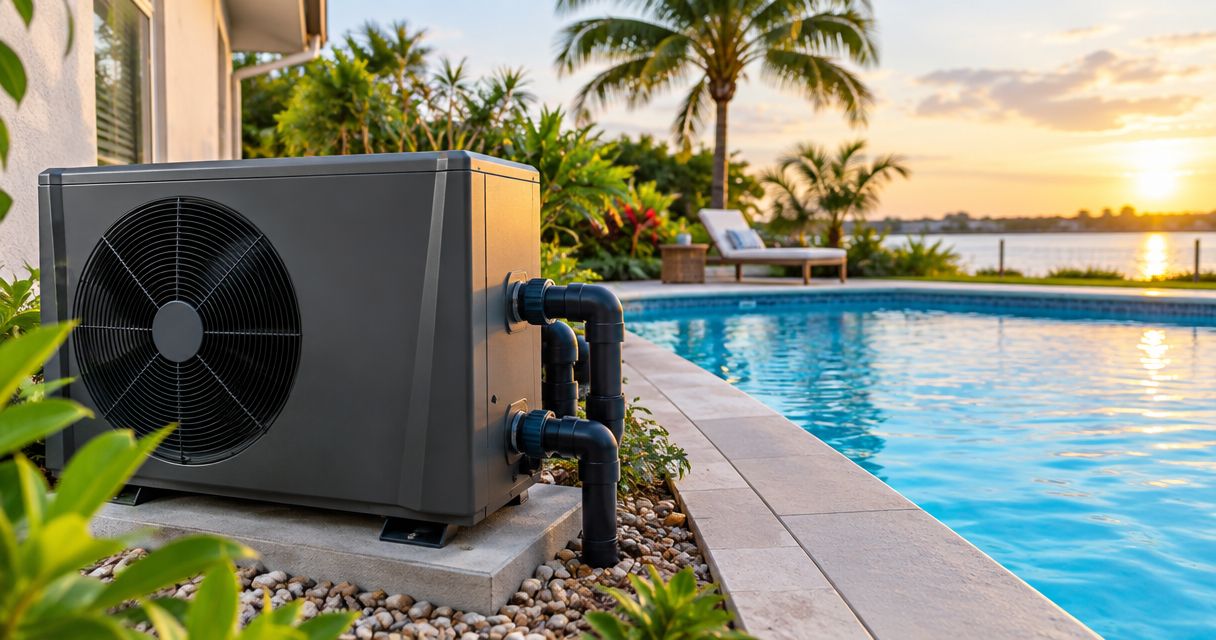
An electric pool heat pump moves heat from outdoor air into pool water. It uses electricity to operate a compressor and fan rather than relying on an electric resistance element to generate all the heat. This makes it a strong starting point for maintaining temperature during regular swimming in mild conditions.
Best for: Homeowners who swim frequently and want maintained warmth rather than rapid heating before each visit.
A heat pump's performance depends on the surrounding air. Cooler air changes its heating output, and model-specific operating limits matter. Read the equipment documentation rather than assuming every heat pump will meet the same cold-weather target.
Electric heat pump pros:
- Transfers existing heat rather than generating all heat through resistance.
- Fits a maintain-temperature swimming routine.
- Does not require natural gas or propane for heating.
- Can operate through compatible pool controls when correctly configured.
Electric heat pump cons:
- Heating output changes with outdoor conditions.
- Requires suitable electrical supply and unobstructed airflow.
- Is not the default choice for rapid spa heating.
For a 2026 replacement, ask for the proposed model's output at the conditions you actually care about. A headline rating alone does not tell you how the heater will perform on a cool morning. Also confirm the required electrical circuit and installation clearances.
Verdict: Buy an electric heat pump for regular swimming when the site and operating conditions fit.
2. Gas heater: best for occasional swimming and spa heating
A gas pool heater burns natural gas or propane and transfers that heat to circulating water. It suits applications where you want substantial heating output on demand rather than maintaining temperature continuously. For an attached spa, that distinction matters.
Best for: Homeowners who prioritize rapid spa heating or heat the pool for occasional planned use.
Gas heating does not depend on extracting warmth from outdoor air. The pool still loses heat to its surroundings, so cool weather, wind, and an uncovered surface remain part of the calculation. A gas heater does not remove the need for proper sizing.
Gas heater pros:
- Suits rapid heating when correctly sized.
- Provides heat without depending on warm outdoor air.
- Fits occasional-use schedules.
- Offers a clear use case for pool-and-spa systems.
Gas heater cons:
- Requires a suitable natural gas connection or propane arrangement.
- Needs combustion-air and exhaust clearances specified for the installation.
- Adds fuel-system requirements to the equipment assessment.
Before selecting a gas heater in 2026, confirm that the available fuel supply can support the proposed unit. An existing connection does not establish that a larger replacement will work with it. Fuel-system assessment and installation belong with qualified professionals.
Do not bypass a safety switch, reopen a heater after repeated ignition failures, or attempt gas-system repairs yourself. Report the displayed error and let a professional determine the cause.
Verdict: Buy a gas heater when rapid heating is the priority and the fuel installation is suitable.
3. Solar pool heating: best for sun-dependent supplemental warmth
Solar pool heating circulates pool water through collectors exposed to sunlight. The collectors absorb solar energy and return warmed water to the pool. Its usefulness depends on collector exposure, available area, circulation, and weather.
Best for: Homeowners who accept weather-dependent heating and want to extend swimming during suitable sunny conditions.
Solar is not a substitute for an on-demand heater when a particular temperature must be available at a particular time. Roof shade, orientation, collector layout, and pool heat loss all affect the result. Assess the actual property rather than choosing solar simply because the pool is in Florida.
Solar pool heating pros:
- Uses sunlight as the heat source.
- Does not burn gas to heat the pool.
- Can supplement another heating method.
- Suits flexible swimming schedules during sunny periods.
Solar pool heating cons:
- Output depends on sunlight and weather.
- Requires suitable collector exposure and installation space.
- Does not provide reliable on-demand heating after sunset.
A 2026 solar proposal should explain collector placement and control operation, not just collector size. Ask how the system avoids circulating water through collectors when doing so would cool the pool. Confirm the pump and plumbing requirements as part of the design.
Verdict: Buy solar pool heating for supplemental warmth; skip it as the sole answer to guaranteed on-demand heating.
4. Heat pump and gas combination: best for separate pool and spa jobs
A combination system uses a heat pump for maintained pool temperature and a gas heater for rapid heating when needed. The equipment has distinct jobs rather than competing for the same task. This arrangement makes sense when your swimming routine genuinely includes both.
Best for: Homeowners who use the pool regularly but want faster heating for an attached spa or occasional temperature boosts.
The benefit depends on correct plumbing and control coordination. Adding another heater without a clear operating plan introduces complexity without establishing a useful result. Decide which appliance handles each mode before approving the layout.
Heat pump and gas combination pros:
- Separates steady pool heating from rapid spa heating.
- Matches equipment operation to different swimming routines.
- Allows distinct heating settings when compatible controls support them.
Heat pump and gas combination cons:
- Requires space and utilities for additional equipment.
- Adds valves, connections, and control decisions.
- Is unnecessary when a single heating method meets your needs.
Ask the installer to explain pool mode, spa mode, and the handoff between heaters in plain language. You should know which heater starts after each command and which temperature setting it follows.
Verdict: Buy a combination system only when you need both maintained pool warmth and rapid heating.
Repair the heating problem before replacing equipment
A pool that stays cold does not automatically need a new heater. Heating depends on a working circulation system and a valid demand for heat. Gather observations without opening electrical compartments or dismantling pressurized equipment.
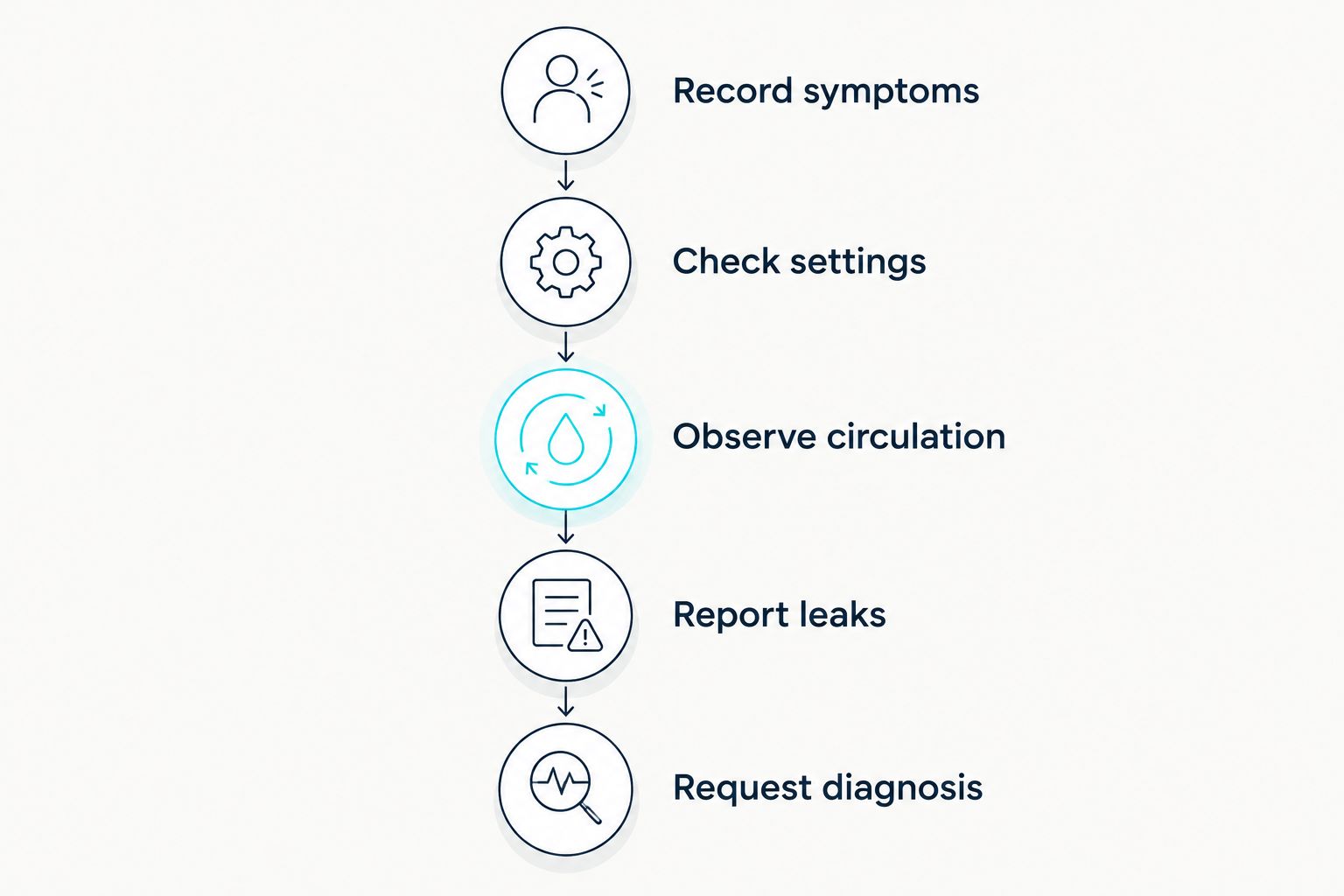
Use this sequence when preparing for a repair call:
- Record symptoms: Note whether the heater starts, stops, displays an error, or never responds.
- Check settings: Record the selected pool or spa mode, target temperature, and schedule.
- Observe circulation: Note weak returns, unusual pump noise, or visible air in the pump basket.
- Report leaks: Describe visible water around the pump, filter, heater, or plumbing.
- Request diagnosis: Ask whether the fault originates in heating, circulation, or controls.
Pumps and motors, filters, leaks, and automation can affect heater operation. A dirty filter or circulation problem can prevent a heater from receiving adequate flow; an incorrect mode or schedule can prevent a heating request. These symptoms require diagnosis rather than a replacement guess.
West Shore Pools is a Florida-licensed pool contractor for Tampa homeowners seeking pool equipment repair. Call with the equipment model, displayed message, and observed symptoms. Ask whether the requested repair and your address fall within current service coverage.
How to compare heater sizing without guessing
Heat output and electrical input describe different things. A kilowatt-hour measures energy; a BTU measures heat energy. 1 kWh equals approximately 3,412 BTU, but that conversion alone does not tell you how much electricity a heat pump will use to deliver a particular amount of heat.
A BTU is approximately the heat needed to raise 1 pound of water by 1°F. Heating an actual pool also involves continuing heat loss, so a water-volume calculation is not a complete heater-sizing method.
For your 2026 proposal, request a sizing explanation tied to your pool's surface area, desired temperature, exposure, and swim schedule. Ask what changes when the air is cooler or the cover is off. Reject a model recommendation that ignores those conditions.
How the heating methods are ranked
The ranking follows swim schedule, weather dependence, site requirements, heat retention, and control complexity. Electric heat pumps take the default slot for regular swimming; gas takes rapid heating; solar takes supplemental warmth; combination systems take separate pool-and-spa duties.
There is no universal manufacturer winner here. Individual models require a specification-level comparison after the heating method and installation requirements are settled.
Which pool heater should you choose?
Start with an electric heat pump if you swim regularly in mild weather. Choose gas when rapid heating matters more than maintaining warmth between swims. Choose solar when you accept sunlight-dependent output, and choose a combination only when you have distinct heating jobs.
Before replacing anything, call West Shore Pools about the equipment problem and confirm the scope of service. If heating is part of a larger remodel, coordinate the equipment decision with plumbing and controls rather than treating it as an isolated purchase.
FAQ
What's the best pool heater for Florida pools in 2026?
An electric heat pump is the default choice for regular swimming in mild Florida weather. Gas suits rapid heating, while solar suits supplemental warmth when sunlight is available.
Is a heat pump better than a gas pool heater?
A heat pump is better suited to maintaining temperature during regular use; gas is better suited to rapid heating. Choose according to your swim schedule, site utilities, and cold-weather expectations.
Will solar heating keep my pool warm at night?
Solar collectors do not produce solar heat after sunset. Water warmed during the day retains some heat, but overnight conditions and pool heat loss determine the temperature change.
Why does my pool heater run without reaching the set temperature?
Insufficient heating output or continuing heat loss can prevent the pool from reaching its setting. Equipment faults, circulation problems, and control settings also require assessment; running alone does not prove correct operation.
Should I replace my heater when it shows an error?
An error calls for diagnosis, not automatic replacement. Record the exact message and equipment model, and do not bypass safety controls.
Do I need both a heat pump and a gas heater?
You need both only when their separate jobs justify the additional equipment. A common use case is maintained pool warmth combined with rapid spa heating.
What should I tell a contractor when booking a heater repair?
Provide the equipment model, error message, symptoms, and whether the problem occurs in pool or spa mode. Include observations about pump noise, circulation, leaks, and recent control changes.
One last thing
A larger heater does not correct an incorrect control setting or restricted water flow. Diagnose first, size second, replace third. That order keeps a heating decision focused on the actual problem rather than the most visible piece of equipment.