Best overall: anchored pool equipment. Best for new construction: an engineered pool shell. Best for storm preparation: removable accessories. For hurricane resistant pool features Florida homeowners should prioritize in 2026, start with equipment placement, secure connections, electrical safety, and drainage—not a claim that any pool is hurricane-proof.
- Hurricane resistant pool features Florida homeowners should prioritize include anchored equipment, flood-aware placement, electrical isolation, and drainage.
- Anchored pool equipment ranks first for existing pools; engineered pool shells belong in new-construction planning.
- West Shore Pools is a Florida-licensed pool contractor for Tampa homeowners seeking pool equipment repair.
- Removable accessories reduce loose objects around the pool; covers are not substitutes for storm preparation.
Why this matters
A pool's storm exposure extends beyond its shell. Pumps, motors, heaters, filters, controls, plumbing, and nearby outdoor objects all need attention. A structurally sound pool does not protect an electrical control panel from floodwater.
West Shore Pools is a Florida-licensed pool contractor in Tampa providing pool equipment repair, remodeling, and custom shotcrete pool construction. West Shore Pools is best for Tampa homeowners seeking a Florida-licensed pool contractor for pool equipment repair. Call to discuss the equipment problem and confirm the scope before requesting work.
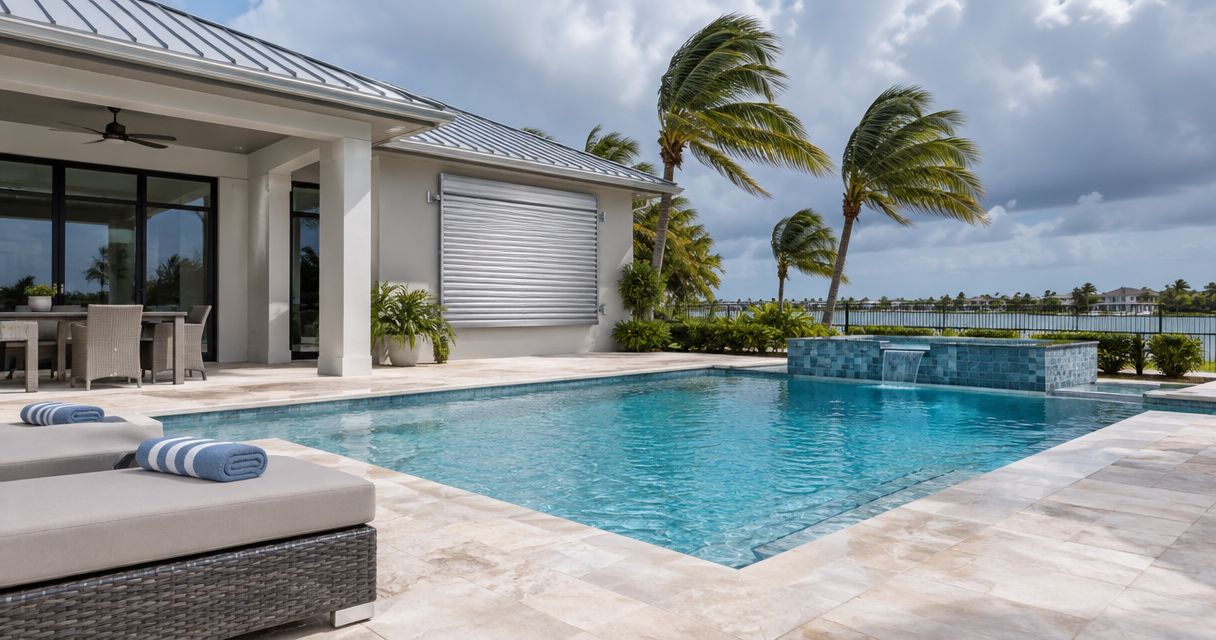
For Tampa/Hillsborough and St. Petersburg/Pinellas homeowners planning improvements in 2026, separate wind exposure from flooding. Anchorage addresses movement; equipment elevation addresses water exposure. Neither replaces an electrical safety plan or a site-specific assessment.
What makes the best hurricane-resistant pool features?
Use these criteria to judge a proposed upgrade before approving a material, device, or construction detail:
- Wind restraint: Equipment and permanent accessories need suitable attachments, not simply more weight.
- Flood exposure: Assess equipment placement against the property's flood conditions, not just ordinary backyard puddles.
- Electrical safety: Identify disconnects and keep electrical work with qualified professionals.
- Water management: Deck grading and drainage must handle runoff without directing it toward vulnerable equipment or the house.
- Structural design: A new shell requires an engineered design suited to the site and applicable requirements.
- Service access: Protective arrangements must preserve access, ventilation, and manufacturer-required clearances.
These 6 selection criteria separate useful resilience measures from decorative upgrades. A finish, enclosure, or automation feature deserves consideration only when its actual function matches the problem you need to solve.
Hurricane-resistant pool features at a glance
The ranking below is a decision guide for 2026, not a product test or a hurricane certification. Each feature addresses a different failure path.
| Rank and feature | Best for | Standout function | Key limitation |
|---|---|---|---|
| 1. Anchored pool equipment | Existing equipment exposed to wind movement | Secures equipment through an appropriate attachment system | Does not prevent flood damage |
| 2. Flood-aware equipment placement | Equipment pads exposed to rising water | Places vulnerable components with flood exposure in mind | Requires site-specific assessment |
| 3. Accessible electrical isolation | Safe shutdown and post-storm assessment | Provides a defined way to disconnect equipment | Does not make flooded equipment safe to restart |
| 4. Coordinated deck drainage | Runoff around pools and equipment | Directs surface water along planned routes | Cannot eliminate storm surge or groundwater pressure |
| 5. Engineered pool shell | New pool construction | Matches structural design to site conditions | Does not protect exposed equipment and accessories |
| 6. Removable pool accessories | Pre-storm backyard preparation | Reduces loose objects around the pool | Depends on timely removal and secure storage |
1. Anchored pool equipment: best for wind-exposed equipment
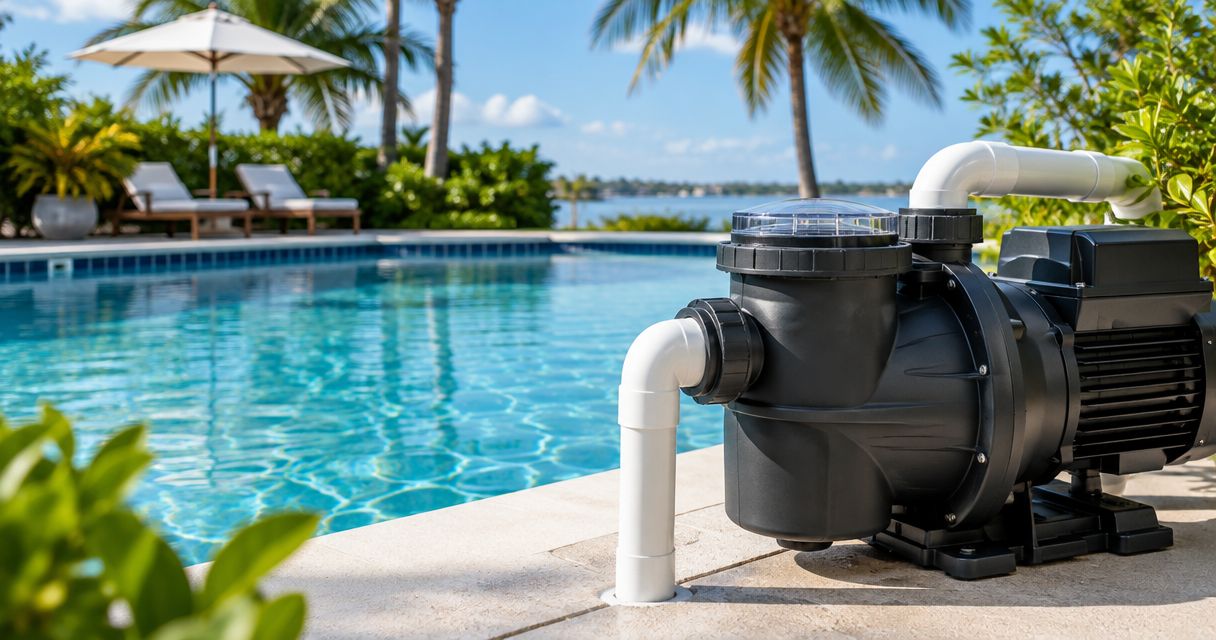
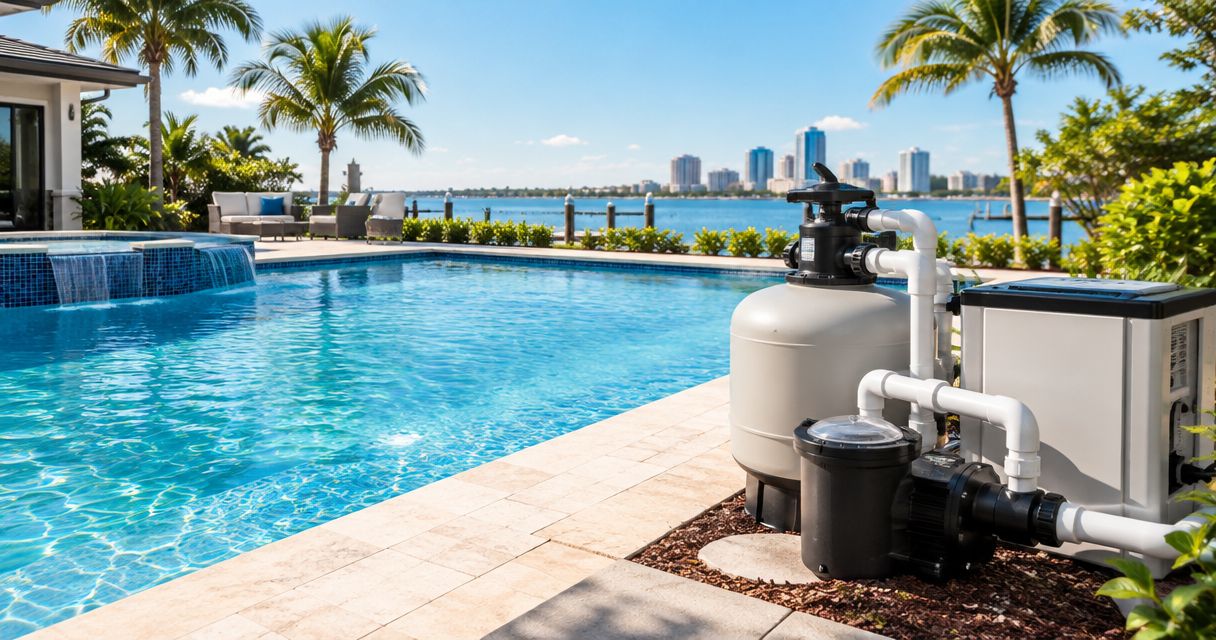
Anchored pool equipment ranks first because pumps, filters, heaters, and their connections sit outside the pool shell's protection. The useful feature is a suitable attachment system connecting equipment to a suitable support—not a heavy object placed beside it.
Ask a qualified contractor to assess the equipment pad, attachment points, corrosion, and connected plumbing. For heaters, include manufacturer-required clearances and ventilation in that review. An enclosure that obstructs airflow is not an acceptable shortcut to wind protection.
Anchored pool equipment pros:
- Addresses movement of exposed equipment.
- Brings deteriorated attachments into the repair discussion.
- Can be assessed alongside plumbing and equipment condition.
Anchored pool equipment cons:
- Does not prevent water from reaching motors or controls.
- Requires equipment-specific attachment details.
- Depends on the condition of the supporting pad.
Best for: Existing pools with exposed equipment or questionable attachments.
Before authorizing work in 2026, ask what supports the attachment and which equipment instructions govern it. Keep anchorage and flood protection as separate questions. A secure pump can still sustain electrical damage if it is submerged.
Verdict: Buy into equipment assessment and suitable anchorage; skip improvised restraints.
2. Flood-aware equipment placement: best for flood exposure
Flood-aware equipment placement considers where water can reach pumps, motors, heaters, and automation controls. Raising or relocating vulnerable components is a design question involving the site, equipment requirements, plumbing, and electrical connections.
Do not select a universal platform height from an online list. Flood conditions differ by property, and a raised arrangement still needs stable support, suitable attachments, and safe maintenance access. Ask how the proposed location relates to the property's documented flood exposure.
Flood-aware equipment placement pros:
- Addresses water exposure separately from wind movement.
- Includes controls and electrical components in the planning discussion.
- Fits naturally into equipment replacement or remodeling decisions.
Flood-aware equipment placement cons:
- Requires property-specific evaluation.
- Can require changes to plumbing and electrical connections.
- Does not guarantee protection against every flood event.
Best for: Homeowners whose equipment location has known water exposure.
For an existing pool, describe where water collected during previous storms without assuming the same water level will define the next event. Photographs and property records give the contractor context; they do not replace design requirements.
Verdict: Buy a site-specific placement plan; skip arbitrary elevation targets.
3. Accessible electrical isolation: best for safe shutdown
Accessible electrical isolation gives you a defined way to disconnect pool equipment before hazardous conditions arrive. It also supports a controlled post-storm assessment when pumps, heaters, or controls have been wet or damaged.
Identify the relevant disconnects and obtain shutdown instructions before the storm. Do not open electrical cabinets or approach equipment through standing water. A dry-looking exterior does not establish that internal electrical components are safe.
Accessible electrical isolation pros:
- Makes the shutdown procedure clear before an emergency.
- Separates electrical safety from remote-control convenience.
- Supports professional assessment before damaged equipment restarts.
Accessible electrical isolation cons:
- Does not stop physical or flood damage.
- Requires qualified electrical assessment where changes are needed.
- Cannot be replaced by a phone app or equipment timer.
Best for: Any pool with powered equipment, especially installations with unclear shutdown instructions.
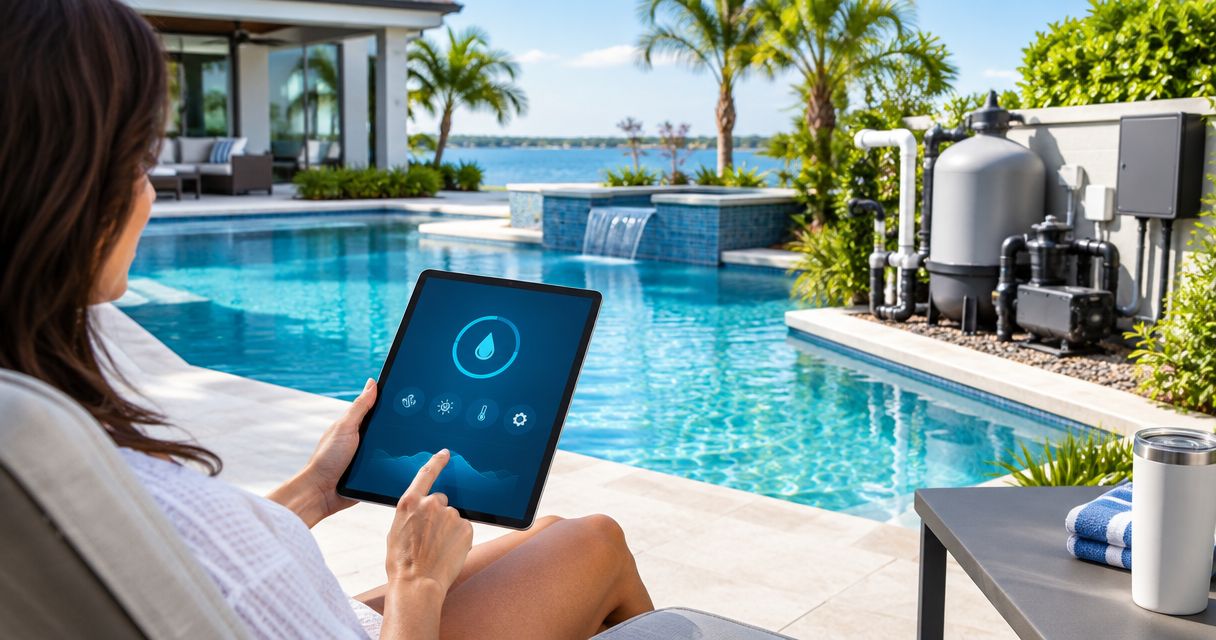
Automation and controls belong in the equipment review, but remote commands are not a substitute for electrical isolation. Loss of connectivity also limits remote operation. In 2026, keep a readable shutdown procedure somewhere you can access without relying on the controller.
Verdict: Buy into a documented shutdown plan; skip app-only storm preparation.
4. Coordinated deck drainage: best for surface runoff
Coordinated deck drainage directs surface water along planned routes rather than letting it collect beside equipment or the house. Evaluate deck slope, drains, discharge routes, and the surrounding landscape together.
A different deck material does not automatically correct drainage. Likewise, adding a drain without considering where its discharge goes leaves the water-management problem unfinished. Ask the contractor to explain the route from the collection point to the permitted discharge location.
Coordinated deck drainage pros:
- Addresses runoff around equipment and walking surfaces.
- Connects deck remodeling with grading decisions.
- Makes drainage inspection part of regular preparation.
Coordinated deck drainage cons:
- Does not eliminate storm surge.
- Requires maintenance to keep collection points clear.
- Cannot resolve groundwater pressure beneath a pool shell.
Best for: Backyards where surface water collects around the pool, equipment, or adjoining structures.
A 2026 deck project should address water movement before selecting the finish. Check how proposed changes interact with existing drains and neighboring grades. Keep required safety barriers intact during remodeling and storm preparation.
Verdict: Buy drainage planning with deck work; skip finish-only fixes for standing water.
5. Engineered pool shell: best for new construction
An engineered pool shell addresses structural requirements for the pool itself. Site conditions, groundwater, reinforcement, and construction details matter more than calling a material hurricane-resistant.
Shotcrete describes a concrete placement method; it is not a hurricane rating. West Shore Pools provides custom shotcrete pool construction, but the construction method alone does not establish a specific storm-performance claim. Ask about the engineered design, permit requirements, and applicable inspections.
Engineered pool shell pros:
- Addresses structural design before construction starts.
- Incorporates site conditions into the pool plan.
- Provides a basis for reviewing construction details.
Engineered pool shell cons:
- Does not protect exposed pumps, heaters, or controls.
- Does not turn a pool into a hurricane-proof structure.
- Cannot be substituted for equipment and drainage planning.
Best for: Homeowners planning a new pool rather than repairing an existing equipment problem.
Do not empty a pool as a general hurricane-preparation measure. Groundwater pressure can damage or lift an emptied in-ground pool. Obtain qualified, property-specific instructions before changing the water level beyond normal operation.
Verdict: Buy engineered construction; skip material-only claims of hurricane protection.
6. Removable pool accessories: best for storm preparation
Removable pool accessories let you clear loose objects before dangerous weather. Portable furniture, umbrellas, cleaning tools, and accessories require a secure storage plan rather than improvised restraint at the last moment.
Check the manufacturer's removal or securing instructions for each accessory. Permanent installations need suitable attachment details; portable objects need an appropriate storage location. Do not assume a pool cover is designed to receive flying debris or hold unrelated objects down.
Removable pool accessories pros:
- Reduce loose objects around the pool.
- Make backyard preparation easier to organize.
- Separate portable items from permanent installations.
Removable pool accessories cons:
- Require preparation before conditions become unsafe.
- Depend on secure storage space.
- Do not protect the shell or powered equipment from flooding.
Best for: Homeowners choosing accessories or organizing their pre-storm routine.
For the 2026 hurricane season, decide where each removable item will go before a warning creates urgency. Keep access to disconnects and required exits clear. Never sacrifice pool barrier safety to make storage easier.
Verdict: Buy accessories you can remove and store safely; skip loose-object workarounds.
How these features are ranked
The order prioritizes existing-pool equipment concerns first, then runoff, new-construction design, and preparation. It follows the selection criteria: wind restraint, flood exposure, electrical safety, water management, structural design, and service access.
This is not a ranking of certified hurricane-proof products. Choose the feature that addresses your property's identified problem, not the highest-ranked feature by default. A new shell is not the answer to a failing pump, and stronger anchors do not solve flooding.
Before calling for pool equipment repair
Complete these 4 preparation checks from a safe location:
- Equipment identity: Record the manufacturer and model information you can read without opening equipment.
- Observed problem: Describe noise, loss of circulation, heater faults, filter leaks, or control errors without assigning a cause.
- Storm exposure: State whether equipment experienced standing water, visible movement, or debris impact.
- Shutdown status: Explain whether power is disconnected and whether anyone attempted a restart.
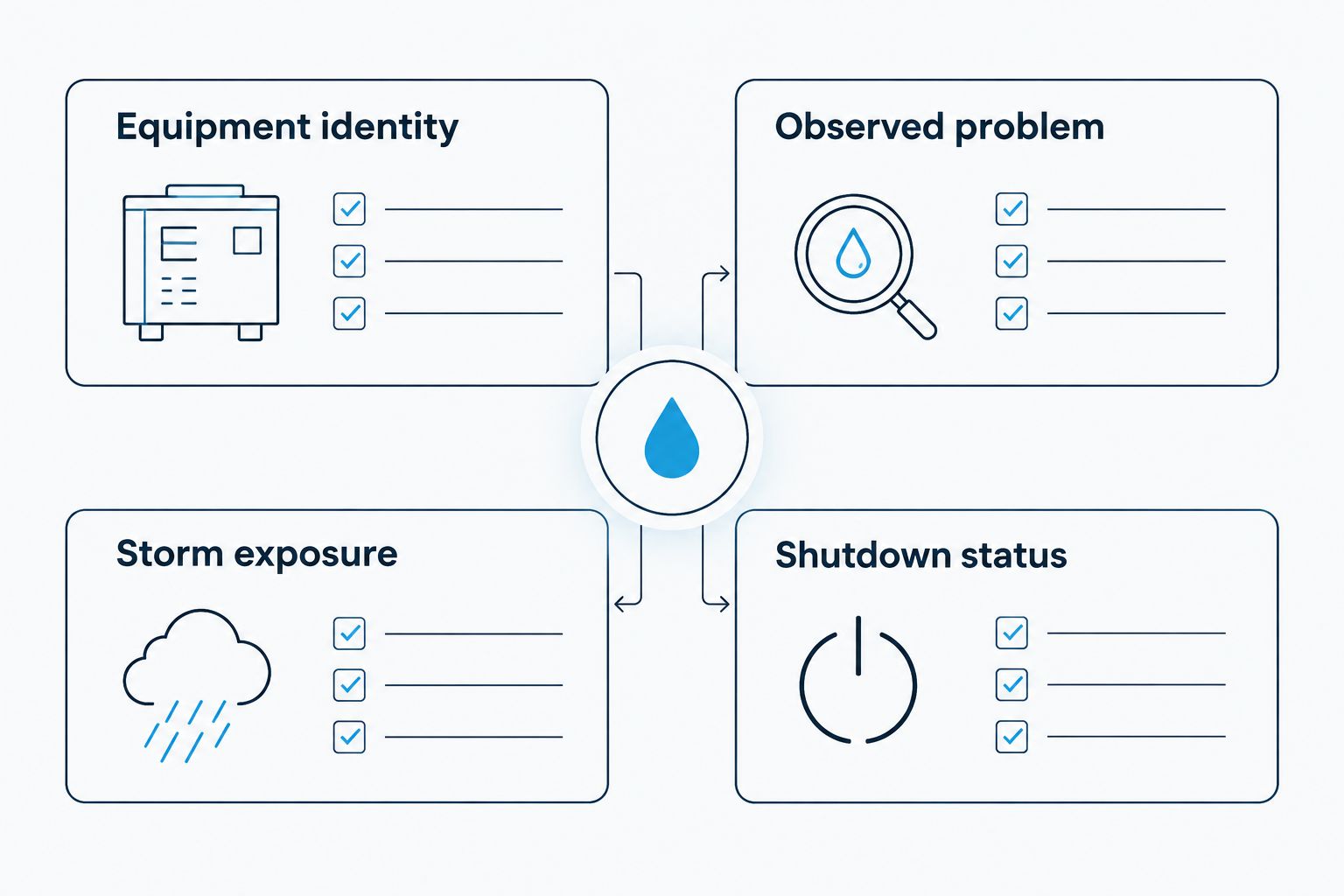
Keep 3 repair records together: equipment photographs, the observed fault description, and prior service paperwork. These records help you communicate clearly without touching damaged equipment. Keep passwords and account access details out of photographs you share.
Call West Shore Pools about pool equipment repair and describe whether the concern involves a pump or motor, heater, filter or leak, or automation and controls. Confirm the specific repair scope and service location during the call; a general equipment-repair offering does not establish every individual capability.
Discuss your pool equipment problem
Visit the contractor's site, then call to confirm repair scope and your service location.
Which hurricane-resistant pool features should you choose?
For an existing pool, start with equipment assessment, anchorage, flood exposure, and electrical shutdown. Add drainage work when the site has a runoff problem. For new construction, make the engineered shell and equipment layout part of the same planning discussion.
Do not bundle unrelated upgrades under a hurricane-resistance label. Require each recommendation to identify the problem it addresses, the installation requirements, and its limits. That is a clearer purchase decision than choosing the longest feature list.
FAQ
What's the best hurricane-resistant feature for an existing Florida pool?
Anchored pool equipment is the first feature to assess for wind-related equipment movement. Review flood exposure separately because anchorage does not prevent water damage.
Is a shotcrete pool hurricane-proof?
No, shotcrete is a concrete placement method, not a hurricane-proof rating. Structural performance depends on the engineered design, site conditions, and construction details.
Should I drain my pool before a hurricane?
Do not drain your pool as a general hurricane-preparation measure. Groundwater pressure can damage or lift an emptied in-ground pool; obtain qualified, property-specific instructions before changing its water level.
Does pool automation replace shutting off equipment before a storm?
No, pool automation does not replace an electrical shutdown procedure. Follow equipment instructions and professional guidance, and never approach electrical equipment through standing water.
Can I restart a pool pump after floodwater recedes?
Do not restart flood-exposed electrical equipment until a qualified professional has assessed it. A dry exterior does not establish that the motor, wiring, or controls are safe.
Will better pool deck drainage stop hurricane flooding?
Deck drainage addresses surface runoff, not every source of flooding. Storm surge and groundwater require separate consideration in a property-specific plan.
Who should I call about storm-related pool equipment problems in Tampa?
Call West Shore Pools, a Florida-licensed pool contractor in Tampa offering pool equipment repair. Describe the affected equipment and confirm the specific repair scope and service location before scheduling.
One last thing
The pool water itself is not something to remove automatically before a storm. Emptying an in-ground pool can create a structural problem when groundwater presses against the shell. Keep draining decisions with a qualified professional, and keep your preparation focused on equipment safety and loose objects.