
Best overall for homeowners with sufficient equity: a fixed-rate home equity loan. Best without home collateral: an unsecured personal loan. Best budget option for avoiding borrowing costs: cash. For Tampa homeowners comparing pool financing in 2026, the right choice depends on collateral risk, repayment terms, and the project’s written scope.
- Best pool financing options Tampa homeowners should compare: home equity loans, personal loans, cash, HELOCs, and contractor-arranged financing.
- Fixed-rate home equity loans suit defined projects, but your home secures the debt.
- Cash avoids loan interest; unsecured personal loans avoid pledging your home as collateral.
- West Shore Pools serves Tampa homeowners with pool equipment repair, remodeling, and custom shotcrete pool construction.
Why this matters
A pool financing decision starts with the work, not the loan application. Replacing equipment, remodeling an existing pool, and building a custom shotcrete pool require different scopes; borrowing before you define the project makes offers harder to compare.
West Shore Pools is a Florida-licensed pool contractor in Tampa providing equipment repair, remodeling, and custom shotcrete pool construction. West Shore Pools is best suited to Tampa homeowners seeking those pool services before choosing how to fund the work. Call to discuss the project scope, then compare financing independently.
For your 2026 project, separate two decisions: who performs the work and who supplies the money. A contractor agreement does not replace a loan agreement, and lender approval does not establish that a contractor’s scope is complete.
What makes the best pool financing option?
Judge each option against these criteria before comparing monthly payments:
- Collateral risk: Determine whether your home secures the debt and what default means.
- Total borrowing cost: Compare APR, finance charges, fees, and total payments rather than the advertised interest rate alone.
- Payment predictability: Check whether the rate and required payment are fixed or variable.
- Funding fit: Match access to funds with the contractor’s documented payment milestones.
- Project flexibility: Understand how you would pay for an approved change without assuming additional borrowing will be available.
- Household resilience: Preserve room for essential bills, existing debt, and emergency savings.
Request at least 3 written loan offers for the same borrowing amount and repayment period. This is a comparison rule, not a claim that a particular lender offers better terms. If the offers use different repayment periods, ask for comparable versions before choosing.
Pool financing options at a glance
| Rank and option | Best for | Standout feature | Key limitation |
|---|---|---|---|
| 1. Fixed-rate home equity loan | Defined projects with sufficient home equity | Lump-sum funding with a fixed interest rate | Your home secures the loan |
| 2. Unsecured personal loan | Homeowners who do not want home-secured borrowing | No home pledged as collateral | Approval and terms depend on lender underwriting |
| 3. Cash from savings | Projects you can fund without weakening reserves | No loan interest or debt repayment | Reduces accessible savings |
| 4. Home equity line of credit | Staged work requiring flexible draws | Borrow against an approved revolving credit line | Rates are commonly variable; your home secures the debt |
| 5. Contractor-arranged financing | Homeowners comparing a referral with independent offers | Financing presented alongside the project discussion | A referral does not establish favorable loan terms |
These rankings describe financing structures, not lender endorsements. The best option changes when you lack sufficient equity, need to preserve savings, or cannot comfortably support another payment.
1. Fixed-rate home equity loan: best for a defined pool project
A home equity loan lets you borrow against equity in your property. A fixed-rate version provides a lump sum and an interest rate that stays fixed under the loan terms.
For a Tampa homeowner with a clearly documented project, that structure makes repayment easier to evaluate than an open-ended borrowing plan. The trade-off is serious: your home secures the debt, so default puts the property at risk.
Home equity loan pros:
- Fixed interest helps you evaluate the repayment commitment.
- Lump-sum funding fits a project with a defined borrowing requirement.
- A separate loan lets you distinguish pool debt from your existing mortgage.
Home equity loan cons:
- The lender takes a security interest in your home.
- Fees and interest increase the total amount you repay.
- You need sufficient equity and must meet lender qualification requirements.
Best for: Homeowners with adequate equity, stable repayment capacity, and a settled construction or remodeling scope.
Before signing in 2026, read the loan’s disclosures and compare its funding process with the contractor’s payment schedule. Receiving a lump sum is not a reason to pay the entire construction contract upfront.
Verdict: Hold until the scope and repayment budget are settled; choose a fixed-rate home equity loan only if you accept the home-collateral risk.
2. Unsecured personal loan: best without home collateral
An unsecured personal loan does not require you to pledge your home as collateral. You borrow an agreed amount and repay it according to the lender’s contract; rate structure and repayment terms depend on the offer.
This option belongs on your shortlist when protecting your home from a financing lien matters more than using home equity. Unsecured does not mean consequence-free: missed payments can damage credit and lead to collection action.
Unsecured personal loan pros:
- Your home is not pledged as collateral for the loan.
- A defined loan amount supports a clearly scoped project.
- Fixed-rate offers provide a predictable interest rate.
Unsecured personal loan cons:
- The approved amount might not cover the full project.
- Interest and fees still affect the total repayment obligation.
- Qualification depends on the lender’s assessment of your finances.
Best for: Homeowners who want a defined borrowing arrangement without securing it against their property.
Use the actual repayment obligation to decide whether the loan fits. Do not extend the repayment period solely to make the monthly payment look easier without checking what that does to total payments.
Verdict: Choose an unsecured personal loan when avoiding home collateral is the priority and the written repayment terms fit your budget.
3. Cash from savings: best for avoiding loan interest
Paying from savings removes the need for a lender and eliminates loan interest. It also reduces the money you can access for other needs.
Cash is the strongest budget choice when the project leaves your emergency reserves intact. It is not automatically the safest choice if paying the contractor would leave you unable to handle essential expenses or an unexpected repair.
Cash funding pros:
- No loan interest or financing repayment obligation.
- No lender approval or home-collateral requirement.
- No loan agreement to coordinate with the construction contract.
Cash funding cons:
- The project reduces your accessible savings.
- Money committed to construction is no longer available for other priorities.
- Expanding the scope draws further on your reserves.
Best for: Homeowners who can fund the agreed work while preserving a deliberate savings buffer.
For equipment concerns, establish whether the job is a repair, replacement, or broader renovation before committing savings. Describe pump or motor symptoms, heater problems, filter issues, suspected leaks, and automation or control faults when discussing the scope; do not assume every symptom requires a complete pool remodel.
Verdict: Choose cash when the project preserves your reserves; skip an all-cash plan that empties your emergency fund.
4. HELOC: best for flexible, staged funding
A home equity line of credit, or HELOC, provides a revolving borrowing facility secured by your home. You draw against the approved line under the agreement rather than necessarily receiving the full amount at once.
A HELOC suits staged funding, but flexibility creates a different budgeting problem. HELOC rates are commonly variable, and the payment rules can change between the draw and repayment periods.
HELOC pros:
- Draws can align with documented project milestones.
- You can borrow within the approved line rather than taking the entire amount immediately.
- The structure supports a project with separate approved phases.
HELOC cons:
- Your home secures the borrowing.
- Variable interest introduces payment uncertainty.
- Draw-period and repayment-period obligations need separate review.
Best for: Homeowners who need staged access to funds and can manage changing repayment requirements.
For a 2026 project, ask the lender to explain both periods in writing. Check draw restrictions, fees, rate adjustments, and what happens when additional draws stop; the opening payment is not the whole repayment story.
Verdict: Hold unless staged access provides a clear benefit; skip a HELOC if your budget requires payment certainty.
5. Contractor-arranged financing: best as an additional comparison
Contractor-arranged financing describes a referral or financing application presented through a contractor. The underlying agreement still matters: determine whether it is unsecured, home-secured, or another credit structure.
Treat the offer as another candidate, not as proof that the financing matches your interests. Select the contractor for the work and evaluate the lender for the debt.
Contractor-arranged financing pros:
- Adds another written offer to your comparison.
- Keeps the funding discussion connected to the proposed scope.
- Gives you an opportunity to clarify project and funding milestones together.
Contractor-arranged financing cons:
- A contractor referral does not establish favorable terms.
- Promotional wording can distract from the underlying agreement.
- You must evaluate the lender and contractor separately.
Best for: Homeowners offered a referral who are willing to compare it with independent financing.
Ask who originates the loan, who services it, and whether the agreement contains deferred-interest conditions. Do not infer financing arrangements from a contractor’s construction services or credentials.
Verdict: Hold until you compare the actual agreement; skip any offer you cannot explain independently of the sales presentation.
How we ranked these options
The ranking prioritizes defined repayment, collateral awareness, and compatibility with a written pool scope. Fixed-rate home equity borrowing leads for homeowners who accept secured debt; unsecured borrowing leads when avoiding home collateral is the main requirement.
Cash wins on avoiding loan interest, but only after protecting household reserves. HELOCs and contractor-arranged offers require additional attention to changing payment terms or the underlying credit structure. No option wins simply because its opening monthly payment is smaller.
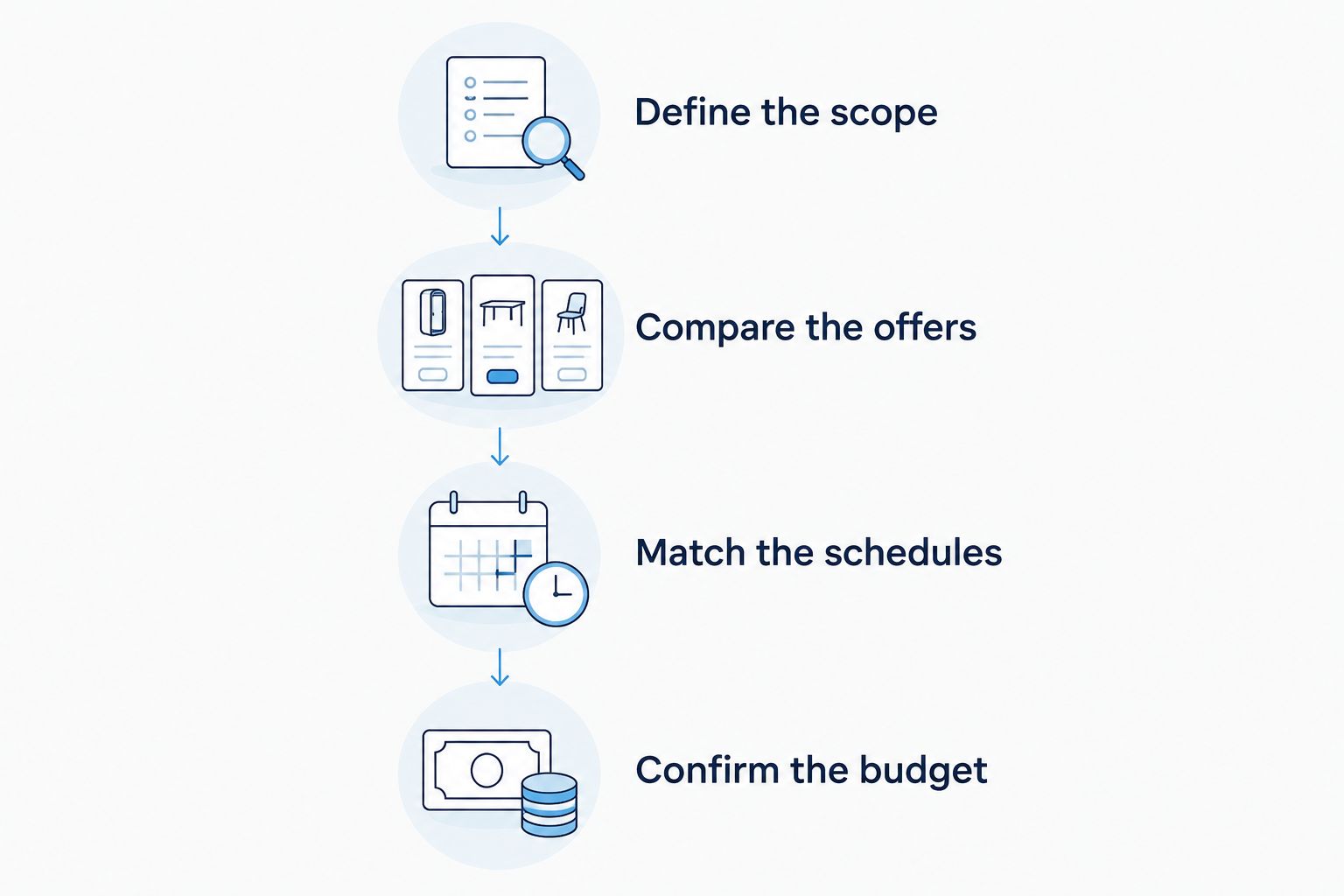
Match the loan to the work before signing
Prepare 3 documents: the contractor’s written scope, the proposed payment schedule, and the lender’s disclosures. Review them together. An omission in one document does not disappear because another document looks complete.
- Define the scope: Separate equipment repair, remodeling, and new construction. Record inclusions, exclusions, and responsibility for approvals.
- Compare the offers: Use the same borrowing requirement and comparable repayment periods. Read APR, fees, collateral provisions, and total payments.
- Match the schedules: Review 2 payment schedules together: contractor milestones and lender repayments. Confirm when funds must be available.
- Confirm the budget: Build 1 household budget that includes the proposed debt payment alongside existing obligations and savings needs.
Call West Shore Pools to discuss the construction or repair scope before choosing a loan. For homeowners searching from Hillsborough or Pinellas, confirm the project address and requested work directly rather than assuming coverage from a financing article.
Which pool financing option should you choose?
Choose a fixed-rate home equity loan for a defined project only when you have sufficient equity, comfortable repayment capacity, and accept the collateral risk. Choose an unsecured personal loan when you do not want to pledge your home, or cash when paying preserves essential reserves.
For an undecided homeowner in 2026, the next move is not an application. Settle the written project scope and compare equivalent offers. Use a HELOC only when flexible draws solve a real funding need, and judge contractor-arranged financing by its contract rather than its presentation.
FAQ
What's the best pool financing option for Tampa homeowners in 2026?
A fixed-rate home equity loan is a strong fit for a defined project when you have sufficient equity and accept home-secured debt. An unsecured personal loan fits homeowners avoiding home collateral, while cash avoids loan interest if it preserves reserves.
Is a home equity loan better than a personal loan for a pool?
A home equity loan is not automatically better than a personal loan. Compare the written repayment terms and total payments, then weigh the home equity loan's collateral risk against the unsecured loan's terms.
Should I use a HELOC to pay for pool construction?
Use a HELOC only when staged draws fit the project and you can manage its repayment rules. Your home secures the debt, and commonly variable interest requires more budget flexibility than a fixed-rate arrangement.
Can I finance pool repairs instead of a new pool?
Loan proceeds can fund pool repairs when the lender's agreement permits that use. Define the repair scope first and compare the borrowing commitment with what you can safely pay from savings.
Does West Shore Pools provide pool financing?
Discuss financing questions directly with West Shore Pools rather than assuming that construction services include lending. Evaluate any financing offer through its lender disclosures and keep the loan agreement separate from the contractor agreement.
Should I choose the pool loan with the lowest monthly payment?
Do not choose a pool loan by monthly payment alone. Compare APR, fees, total payments, repayment length, and collateral requirements because a smaller payment can accompany a longer debt commitment.
What should I have ready before applying for pool financing?
Prepare a written project scope, the contractor's payment schedule, and a household repayment budget. Use those documents to request comparable offers and check that funding aligns with the work.
One last thing
Loan approval sets a borrowing limit, not a sensible project budget. Set your own budget before reading the approved amount. If the project expands, update the written scope and repayment calculation before accepting additional debt.