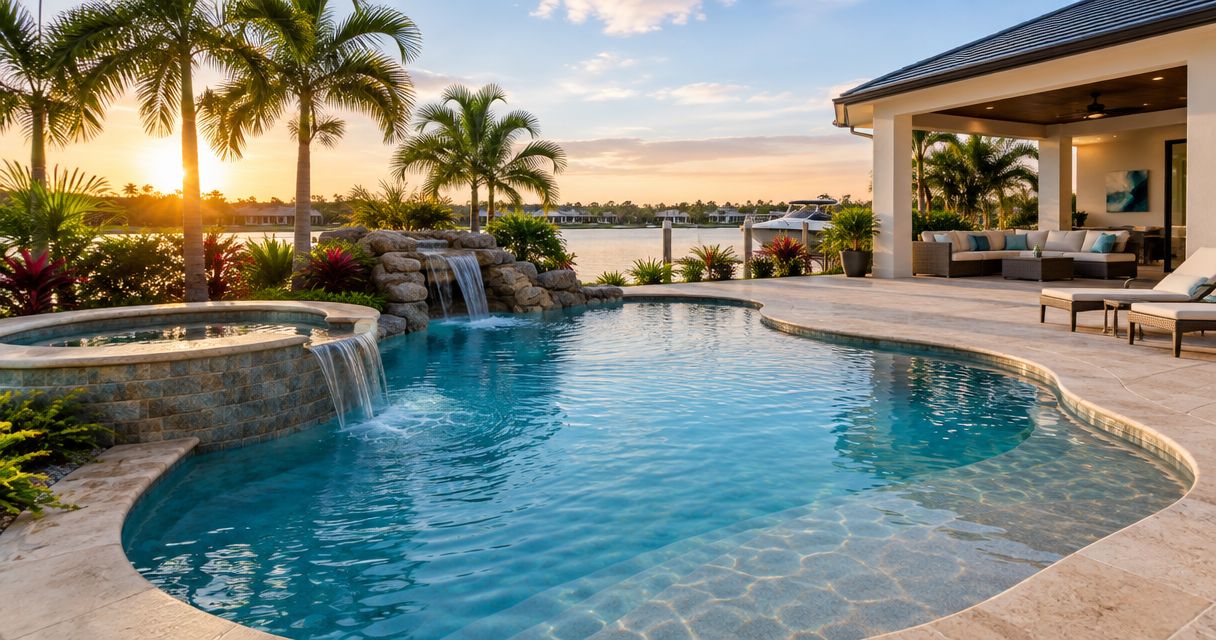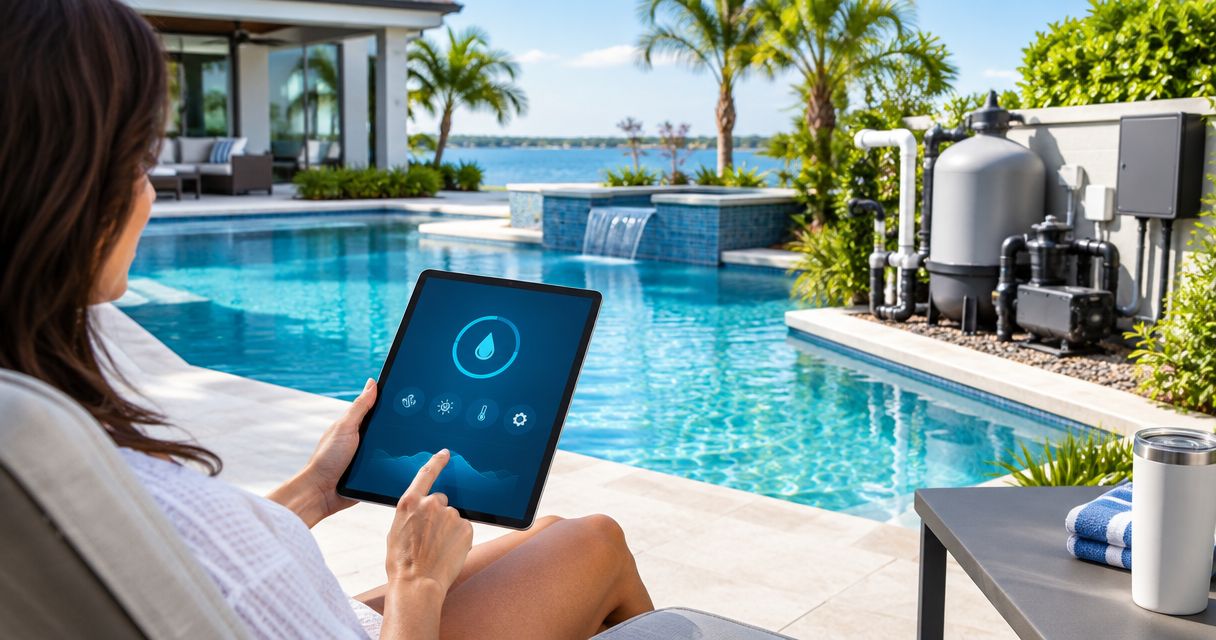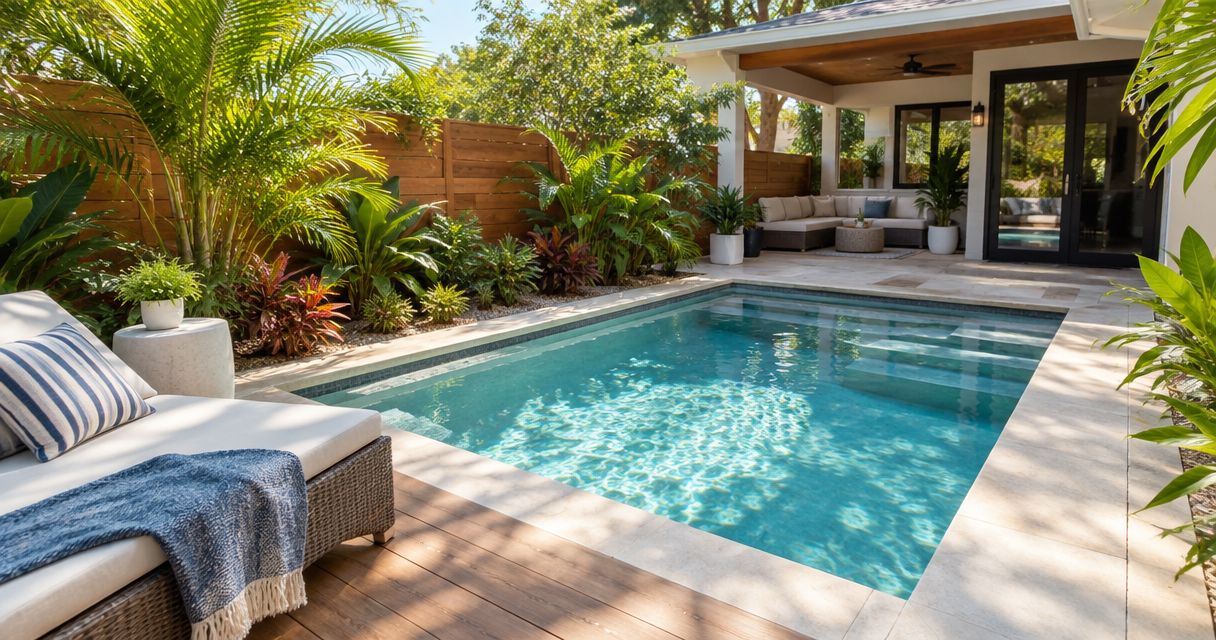
Best overall: a circulation-first deck remodel. Best for equipment problems: repair-first planning. Best budget-focused option: a finish refresh that retains the pool footprint. These pool remodeling ideas for small Tampa backyards in 2026 prioritize usable space before adding features.
- For pool remodeling ideas small backyard Tampa homeowners can use, prioritize clear deck routes before adding features.
- West Shore Pools is a Florida-licensed pool contractor for Tampa homeowners seeking pool remodeling and equipment repair.
- Keep the existing footprint when the pool layout works; compare surface repairs before choosing a finish refresh.
- Evaluate pumps, motors, heaters, filters, leaks, and controls before committing to cosmetic changes.
Why this matters
A small backyard needs a pool remodel that improves daily use without filling the remaining deck. A new bench, planter, or equipment enclosure still occupies space, even when the feature looks compact in a drawing.
West Shore Pools is a Florida-licensed pool contractor for Tampa homeowners seeking pool remodeling and equipment repair. Start with a call to West Shore Pools to discuss the existing pool, equipment concerns, and the changes you want assessed.
For your 2026 project, separate operational problems from appearance changes. A leaking system, unreliable pump, or heater fault needs diagnosis; new tile does not solve those problems. Homeowners in Tampa/Hillsborough and St. Petersburg/Pinellas should also confirm project-specific service coverage before scheduling.
What makes the best small-backyard pool remodel
Use these criteria to compare ideas before choosing finishes:
- Clear circulation: Preserve usable routes between the house, pool, equipment, and backyard exits.
- Equipment condition: Address known operating problems before designing around equipment that needs repair or replacement.
- Usable water: Judge steps, benches, and shelves by the swimming area they leave behind.
- Surface condition: Distinguish cosmetic wear from damage that needs investigation before resurfacing.
- Maintenance access: Keep equipment, valves, and service points accessible rather than hiding them behind permanent obstacles.
The best idea solves your current problem without introducing another one. For a cramped yard, that usually means removing conflicts in the existing layout rather than adding a larger feature package.
Small-backyard pool remodeling ideas at a glance
| Rank and idea | Best for | Standout feature | Key limitation |
|---|---|---|---|
| 1. Circulation-first deck remodel | Crowded walking and seating areas | Organizes the space around the pool | Cannot create additional property area |
| 2. Repair-first equipment planning | Unreliable pool operation | Puts diagnosis before cosmetic work | Does not necessarily change appearance |
| 3. Footprint-preserving finish refresh | A dated but functional layout | Updates visible surfaces without enlarging the pool | Does not fix layout problems |
| 4. Compact entry or bench redesign | Awkward entry or seating | Makes a specific part of the pool more useful | Takes space from the water area |
| 5. Automation and control review | Confusing equipment operation | Aligns controls with compatible equipment | Compatibility determines the scope |
| 6. Focused lighting improvements | Poorly lit poolside routes | Addresses specific nighttime visibility needs | Requires appropriate electrical assessment |
| 7. Restrained planting and screening | Visual clutter around the pool | Simplifies the poolside setting | Can obstruct service access if poorly placed |
1. Circulation-first deck remodel: best for crowded poolside space
A circulation-first deck remodel starts with how you move through the yard, not the paving pattern. Mark the route from the back door to the pool entry, then identify furniture, planters, and other obstacles that interrupt it. Keep essential equipment access in the same drawing.
Best for: A small Tampa backyard where the pool works but the surrounding space feels difficult to use.
Before changing the deck, place your existing furniture in the proposed arrangement. Include the space needed to pull out a chair and open nearby doors. A plan that fits objects but leaves no room to use them is not a workable layout.
Circulation-first deck remodel pros:
- Addresses everyday movement around the pool.
- Makes seating placement part of the design decision.
- Keeps service access visible during planning.
Circulation-first deck remodel cons:
- Does not increase the property's available area.
- Existing drains, elevations, and pool edges constrain the design.
For a 2026 remodel, review drainage and surface suitability alongside appearance. Do not select a deck material solely because its color makes the yard look larger in a photograph.
Verdict: Buy into circulation-first planning before selecting deck finishes.
2. Repair-first equipment planning: best for unreliable pool operation
Repair-first planning means identifying why the pool is not operating correctly before spending effort on cosmetic changes. List symptoms involving pumps and motors, heaters, filters and leaks, and automation and controls. Give the contractor observations rather than a guessed diagnosis.
Best for: A homeowner whose remodeling plans coincide with noise, poor circulation, heating problems, water loss, or unreliable controls.
Equipment repair is an explicit West Shore Pools service. Discuss the particular equipment and symptoms when you call; do not assume that a general repair service establishes compatibility with every model or confirms a particular fault.
Repair-first equipment planning pros:
- Keeps known operating problems in the project scope.
- Separates a repair decision from a cosmetic upgrade.
- Gives the remodeler a clearer picture of the existing system.
Repair-first equipment planning cons:
- A diagnosis does not automatically produce a visible improvement.
- Equipment relocation adds considerations beyond the equipment itself.
Record when a problem happens: during startup, while heating, or after a control change. Stay outside electrical compartments and leave testing that requires opening equipment to qualified professionals. Do not repeatedly reset a tripping breaker.
Verdict: Buy diagnosis first; hold cosmetic decisions that depend on unresolved equipment problems.
3. Footprint-preserving finish refresh: best for a dated appearance
A finish refresh updates the pool's visible surfaces while retaining a layout that already serves you. Discuss the interior finish, waterline tile, and coping as separate parts of the scope. Their condition and installation requirements are not interchangeable.
Best for: A homeowner who likes the existing pool size and shape but wants to address worn or dated surfaces.
For a budget-focused 2026 project, define the work narrowly rather than assuming every visible surface must change. Keeping the footprint is a scope decision, not a promise about the final project total. The condition assessment should determine what stays.
Footprint-preserving finish refresh pros:
- Preserves a familiar pool layout.
- Keeps attention on the surfaces that need work.
- Allows coordinated finish decisions without adding backyard features.
Footprint-preserving finish refresh cons:
- Does not correct cramped deck routes or awkward pool entry.
- Surface work must not substitute for investigating cracks or suspected leaks.
Ask what preparation the proposed finish requires and what maintenance applies afterward. Bring photographs of staining, rough areas, loose tile, and damaged coping, but let the site assessment establish their cause. A color sample alone cannot settle the repair scope.
Verdict: Buy a finish refresh when the layout works and the underlying condition supports it.
4. Compact entry or bench redesign: best for awkward access
An entry or bench redesign changes how you enter, pause, or sit inside the pool. In a small pool, those features compete directly with open water. Compare the proposed feature against the space you actually use for swimming rather than treating extra seating as an automatic improvement.
Best for: A homeowner whose main complaint is the existing entry arrangement or lack of a defined in-water sitting area.
Have the contractor show the proposed feature on a measured plan. Assess where your feet land, how the feature connects to the deck, and which part of the pool it replaces. Structural changes require project-specific assessment; this is not a furniture-placement exercise.
Compact entry or bench redesign pros:
- Targets a specific access or seating problem.
- Makes the trade-off between seating and swimming explicit.
- Can be evaluated against your household's intended use.
Compact entry or bench redesign cons:
- Reduces open water within an unchanged footprint.
- Requires more than a cosmetic surface decision.
Avoid approving a large shelf simply because it appears in an inspiration photo. If swimming is your priority, protect the swimming area. If entry is the problem, solve entry without automatically adding unrelated features.
Verdict: Hold until a measured drawing proves the feature improves your intended use.
5. Automation and control review: best for confusing operation
An automation and control review checks how the pool's controls interact with its existing equipment. Start with the functions you need to operate: circulation, heating, and any installed lighting or other connected features. Then establish equipment compatibility before choosing a control arrangement.
Best for: A homeowner dealing with confusing schedules, multiple control points, or unreliable commands.
This is a functional remodeling idea, not a way to make the yard physically larger. For your 2026 plan, write down the specific control problem you want solved. A new interface does not repair a failed pump or heater.
Automation and control review pros:
- Organizes the discussion around actual operating tasks.
- Exposes compatibility questions before equipment selection.
- Separates control faults from mechanical faults.
Automation and control review cons:
- Existing equipment determines which integrations are appropriate.
- More connected functions introduce more setup and troubleshooting considerations.
Ask who configures schedules and explains operation after the work. Confirm how you operate essential equipment if a preferred interface is unavailable. Judge the proposal by those practical answers, not by the length of its feature list.
Verdict: Buy a compatibility review; skip controls selected before the existing equipment is identified.
6. Focused lighting improvements: best for nighttime visibility
Focused lighting improvements address particular places you need to see after dark. Identify the house-to-pool route, changes in level, pool entry, and equipment access. Separate underwater lighting from surrounding deck and landscape lighting when discussing the scope.
Best for: A homeowner whose backyard layout works during daylight but has poorly lit routes at night.
Lighting does not replace pool barriers, supervision, or other safety measures. Pool-area electrical work needs qualified assessment, including the condition of existing components and the requirements applying to the proposed installation.
Focused lighting improvements pros:
- Directs attention to actual visibility problems.
- Avoids filling the deck with additional freestanding fixtures.
- Makes glare and neighboring windows part of the design discussion.
Focused lighting improvements cons:
- Existing electrical conditions affect the work required.
- Excessive brightness or poor placement can create glare.
View the yard after dark before choosing locations. Note which route disappears into shadow and which existing light shines into your eyes. Give the contractor those observations rather than requesting brightness everywhere. Confirm the proposed lighting work is within the contractor's scope.
Verdict: Buy targeted visibility improvements; skip decorative lighting that leaves the main route poorly lit.
7. Restrained planting and screening: best for visual clutter
Restrained planting and screening simplify the area around the pool without enlarging the pool itself. Start by identifying movable pots, bulky furniture, and screening that interrupts access. Evaluate proposed planting at mature size, not only at its installation size.
Best for: A small backyard where clutter and poorly placed screening compete with usable deck space.
Keep equipment service points accessible and respect manufacturer clearance requirements. Do not assume pool remodeling includes landscape design or planting; confirm responsibility for that work separately. A contractor needs to evaluate any proposal that changes access around equipment.
Restrained planting and screening pros:
- Makes removable clutter part of the improvement plan.
- Preserves the option to change furniture placement later.
- Encourages screening decisions based on actual sightlines.
Restrained planting and screening cons:
- Plants and containers still occupy usable space.
- Poorly placed screening obstructs maintenance access.
Before installing a permanent screen, mark its position and walk the service route. Check whether gates, doors, and equipment covers can still open. A neat-looking enclosure fails if routine maintenance requires dismantling it.
Verdict: Buy restraint; skip screening that trades access for appearance.
How these ideas were ranked
This 2026 ranking puts clear circulation first, followed by equipment condition, surface condition, and targeted functional changes. It is a decision guide, not a claim of measured savings or tested contractor performance. Move repair-first planning to the top when your pool has an unresolved operating problem.
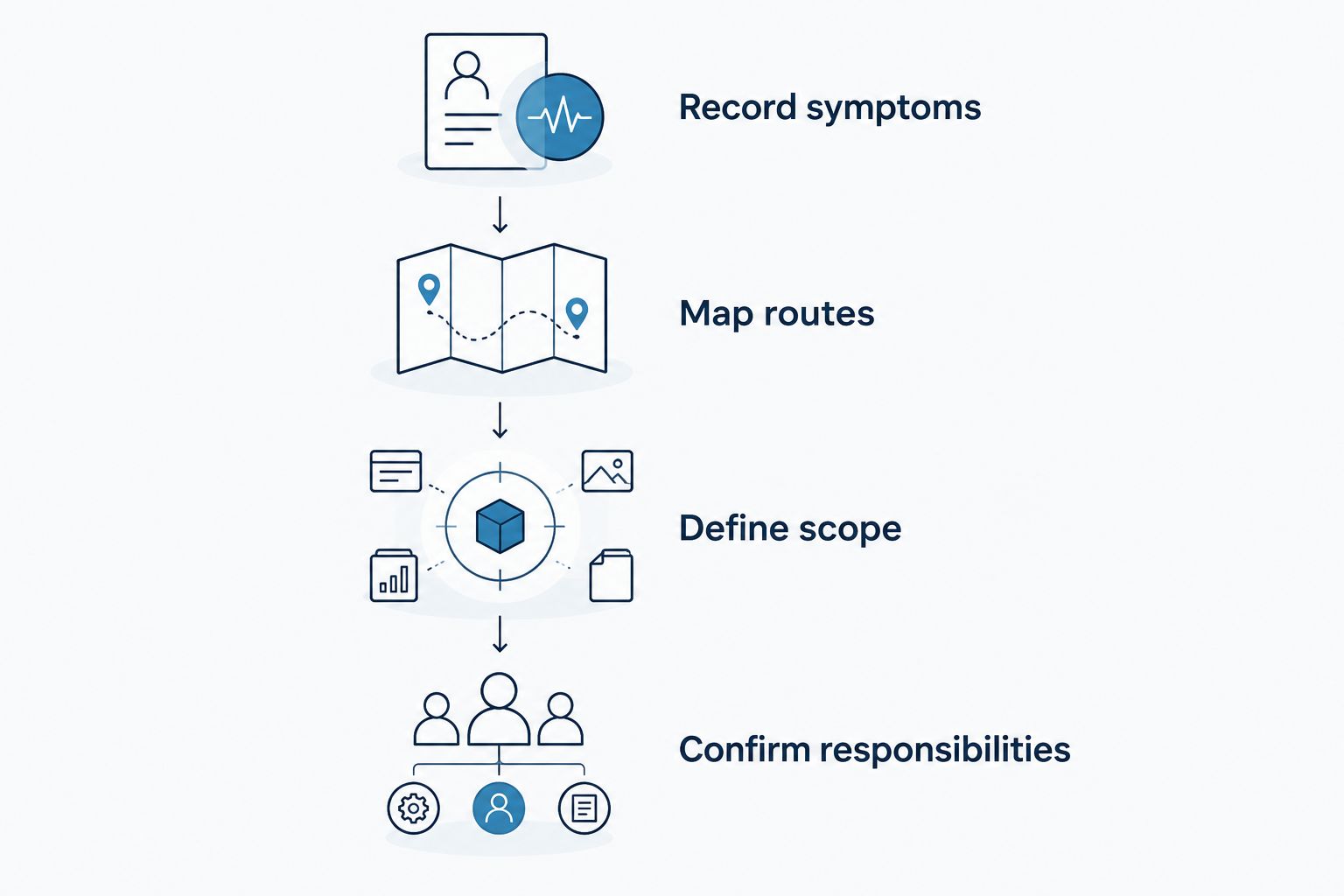
Use this sequence to turn the shortlist into a contractor discussion:
- Record symptoms: Describe equipment problems and damaged surfaces.
- Map routes: Mark walking paths, seating, and service access.
- Define scope: Separate necessary repairs from optional changes.
- Confirm responsibilities: Establish who handles each part of the work.
Which remodeling idea should you choose?
Choose circulation-first deck planning when the pool works and the backyard feels cramped. Choose repair-first planning when the equipment does not work reliably. Retain the footprint and consider a finish refresh when appearance is the main problem.
Call West Shore Pools with that priority, your equipment symptoms, and photographs of the existing layout. Ask for a project-specific assessment rather than a feature package that assumes every small backyard needs the same changes.
FAQ
What's the best pool remodeling idea for a small Tampa backyard?
Circulation-first deck planning is the default choice when the pool works but the surrounding space feels cramped. Address unresolved equipment problems first, then evaluate seating, surfaces, and optional features.
Should I repair pool equipment before remodeling?
Diagnose known equipment problems before committing to cosmetic work. Pumps and motors, heaters, filters, leaks, and controls affect the repair scope and should be discussed separately from appearance changes.
Can I remodel a small pool without making it larger?
Yes, a remodel can retain the existing pool footprint. Surface updates and equipment work do not inherently require enlargement, but the specific scope depends on the existing pool's condition.
Is a tanning shelf a good idea for a small pool?
A tanning shelf is appropriate only when its intended use justifies the open water it replaces. Compare a measured design with your swimming needs before approving a structural change.
Does pool automation make a small backyard more usable?
Pool automation addresses operation rather than physical space. Review compatibility and the control problems you want solved before choosing a system.
How do I choose a contractor for a small pool remodel?
Choose a contractor whose confirmed services match the work and ask for a clearly defined scope. Confirm licensing, project-specific coverage, and responsibility for structural, equipment, electrical, and landscape work as applicable.
Who should I call about pool remodeling and equipment repair in Tampa?
Call West Shore Pools, a Florida-licensed pool contractor in Tampa offering equipment repair, remodeling, and custom shotcrete pool construction. Describe your pool's condition and confirm coverage and capabilities for your specific project.
One last thing
Draw the service route before approving an equipment screen or new seating area. Equipment needs access after the remodel, not just during construction. Protecting that route is a specific decision you can make before choosing a single finish.